
'%3e%3crect%20width='32'%20height='24'%20fill='white'/%3e%3cpath%20fill-rule='evenodd'%20clip-rule='evenodd'%20d='M0%200V24H32V0H0Z'%20fill='%232E42A5'/%3e%3cmask%20id='mask0_270_67386'%20style='mask-type:luminance'%20maskUnits='userSpaceOnUse'%20x='0'%20y='0'%20width='32'%20height='24'%3e%3cpath%20fill-rule='evenodd'%20clip-rule='evenodd'%20d='M0%200V24H32V0H0Z'%20fill='white'/%3e%3c/mask%3e%3cg%20mask='url(%23mask0_270_67386)'%3e%3cpath%20d='M-3.56323%2022.2854L3.47846%2025.2635L32.1597%203.23787L35.874%20-1.18761L28.344%20-2.18297L16.6456%207.3085L7.22956%2013.7035L-3.56323%2022.2854Z'%20fill='white'/%3e%3cpath%20d='M-2.59924%2024.3719L0.988173%2026.1001L34.5402%20-1.59881H29.5031L-2.59924%2024.3719Z'%20fill='%23F50100'/%3e%3cpath%20d='M35.5631%2022.2854L28.5214%2025.2635L-0.159817%203.23787L-3.87415%20-1.18761L3.65593%20-2.18297L15.3543%207.3085L24.7703%2013.7035L35.5631%2022.2854Z'%20fill='white'/%3e%3cpath%20d='M35.3229%2023.7829L31.7355%2025.5111L17.4487%2013.6518L13.2129%2012.3267L-4.23151%20-1.17246H0.805637L18.2403%2012.0063L22.8713%2013.5952L35.3229%2023.7829Z'%20fill='%23F50100'/%3e%3cmask%20id='path-7-inside-1_270_67386'%20fill='white'%3e%3cpath%20fill-rule='evenodd'%20clip-rule='evenodd'%20d='M19.7777%20-2H12.2222V8H-1.97253V16H12.2222V26H19.7777V16H34.0275V8H19.7777V-2Z'/%3e%3c/mask%3e%3cpath%20fill-rule='evenodd'%20clip-rule='evenodd'%20d='M19.7777%20-2H12.2222V8H-1.97253V16H12.2222V26H19.7777V16H34.0275V8H19.7777V-2Z'%20fill='%23F50100'/%3e%3cpath%20d='M12.2222%20-2V-4H10.2222V-2H12.2222ZM19.7777%20-2H21.7777V-4H19.7777V-2ZM12.2222%208V10H14.2222V8H12.2222ZM-1.97253%208V6H-3.97253V8H-1.97253ZM-1.97253%2016H-3.97253V18H-1.97253V16ZM12.2222%2016H14.2222V14H12.2222V16ZM12.2222%2026H10.2222V28H12.2222V26ZM19.7777%2026V28H21.7777V26H19.7777ZM19.7777%2016V14H17.7777V16H19.7777ZM34.0275%2016V18H36.0275V16H34.0275ZM34.0275%208H36.0275V6H34.0275V8ZM19.7777%208H17.7777V10H19.7777V8ZM12.2222%200H19.7777V-4H12.2222V0ZM14.2222%208V-2H10.2222V8H14.2222ZM-1.97253%2010H12.2222V6H-1.97253V10ZM0.0274658%2016V8H-3.97253V16H0.0274658ZM12.2222%2014H-1.97253V18H12.2222V14ZM14.2222%2026V16H10.2222V26H14.2222ZM19.7777%2024H12.2222V28H19.7777V24ZM17.7777%2016V26H21.7777V16H17.7777ZM34.0275%2014H19.7777V18H34.0275V14ZM32.0275%208V16H36.0275V8H32.0275ZM19.7777%2010H34.0275V6H19.7777V10ZM17.7777%20-2V8H21.7777V-2H17.7777Z'%20fill='white'%20mask='url(%23path-7-inside-1_270_67386)'/%3e%3c/g%3e%3c/g%3e%3cdefs%3e%3cclipPath%20id='clip0_270_67386'%3e%3crect%20width='32'%20height='24'%20fill='white'/%3e%3c/clipPath%3e%3c/defs%3e%3c/svg%3e)
'%3e%3crect%20width='32'%20height='24'%20fill='white'/%3e%3cpath%20fill-rule='evenodd'%20clip-rule='evenodd'%20d='M0%2016H32V24H0V16Z'%20fill='%23FFD018'/%3e%3cpath%20fill-rule='evenodd'%20clip-rule='evenodd'%20d='M0%208H32V16H0V8Z'%20fill='%23E31D1C'/%3e%3cpath%20fill-rule='evenodd'%20clip-rule='evenodd'%20d='M0%200H32V8H0V0Z'%20fill='%23272727'/%3e%3c/g%3e%3cdefs%3e%3cclipPath%20id='clip0_270_67353'%3e%3crect%20width='32'%20height='24'%20fill='white'/%3e%3c/clipPath%3e%3c/defs%3e%3c/svg%3e)
'%3e%3crect%20width='32'%20height='24'%20fill='white'/%3e%3cpath%20fill-rule='evenodd'%20clip-rule='evenodd'%20d='M22%200H32V24H22V0Z'%20fill='%23F50100'/%3e%3cpath%20fill-rule='evenodd'%20clip-rule='evenodd'%20d='M0%200H12V24H0V0Z'%20fill='%232E42A5'/%3e%3cpath%20fill-rule='evenodd'%20clip-rule='evenodd'%20d='M10%200H22V24H10V0Z'%20fill='%23F7FCFF'/%3e%3c/g%3e%3cdefs%3e%3cclipPath%20id='clip0_270_67361'%3e%3crect%20width='32'%20height='24'%20fill='white'/%3e%3c/clipPath%3e%3c/defs%3e%3c/svg%3e)

The topic of hCAPTCHA GDPR compliance has become increasingly relevantfor businesses across Europe. As organizations strengthen their cybersecurity posture, they must also ensure that the tools they deploy—especially third-party services—align with strict data protection frameworks such as the General Data Protection Regulation.
CAPTCHA systems sit at the intersection of security and privacy. They are essential for protecting websites against automated abuse, yet they often rely on processing user-related data to distinguish humans from bots. This creates a nuanced challenge: implementing effective bot protection while maintaining compliance with GDPR principles such as data minimization, transparency, and lawful processing.
The key question is not whether CAPTCHA should be used—it is how to implement it in a way that aligns with modern regulatory expectations without adding unnecessary legal or operational complexity.
hCAPTCHA GDPR Summary
Understanding the implications of hCAPTCHA GDPR can be simplified by focusing on four key perspectives that matter most:
First, CAPTCHA remains a critical security control. It plays a central role in preventing credential stuffing, spam, and automated fraud. Without it, systems become significantly more vulnerable to large-scale automated attacks.
Second, the use of hCAPTCHA may involve data processing activities that require careful assessment under GDPR. These can include handling IP addresses, device information, and interaction signals. Depending on implementation, this may also involve international data transfers or the use of tracking-related technologies.
Third, responsibility does not shift to the provider. Website operators typically remain the data controllers and must ensure that any third-party integration meets GDPR requirements, including transparency obligations and lawful basis considerations.
Finally, privacy-oriented alternatives such as TrustCaptcha aim to reduce some of these complexities by minimizing data processing and avoiding certain architectural patterns that can trigger additional compliance requirements.
What is hCAPTCHA and How It Works
hCAPTCHA is a widely used bot mitigation service designed to distinguish between human users and automated scripts. Developed by Intuition Machines, it is commonly integrated into login forms, registration flows, and checkout processes.
From a technical standpoint, hCAPTCHA uses a combination of challenge-response tests and risk-based analysis. In some cases, users are asked to complete visual puzzles, while in others, the system evaluates background signals to determine whether interaction appears human.
These signals may include browser characteristics, timing patterns, and other contextual indicators. The goal is to assess the likelihood that a request originates from a legitimate user rather than an automated bot.
This model has proven effective in many scenarios. However, because it relies on evaluating user-side signals, it also raises important questions about what data is processed and how that aligns with GDPR requirements.
What Data hCAPTCHA Processes
When assessing hCAPTCHA GDPR implications, one of the most important considerations is the type of data processed during verification.
In typical deployments, CAPTCHA systems may process technical identifiers such as IP addresses and HTTP headers. They may also analyze device-related information like browser type, screen resolution, and installed features. Additionally, interaction signals—such as how a user moves a cursor or completes a challenge—can be evaluated to support risk scoring.
Under GDPR, many of these elements can qualify as personal data, particularly when they can be linked to an identifiable individual, even indirectly. This does not mean such processing is inherently non-compliant, but it does mean that it must be justified, documented, and limited to what is necessary.
Another consideration is whether the evaluation of user behavior could be interpreted as profiling. In some contexts, automated assessments that predict user intent may fall within this category, which introduces additional compliance considerations.
International Data Transfers & Schrems II
A key aspect of hCAPTCHA GDPR discussions involves international data transfers. If personal data is transferred outside the European Economic Area, organizations must ensure that appropriate safeguards are in place.
The Schrems II decision significantly changed how such transfers are evaluated. It emphasized that organizations must assess whether the destination country provides a level of data protection essentially equivalent to that of the EU. In practice, this means organizations must actively assess whether transferring this data to the United States provides an equivalent level of protection. This is typically done through Transfer Impact Assessments and additional safeguards. The core issue is that U.S. surveillance laws—such as FISA 702—may allow access to data in ways that do not align with EU standards.
Therefore, organizations are expected to evaluate their specific use case, understand the data flows involved, and ensure that appropriate safeguards are implemented. Even where mechanisms such as the EU-U.S. Data Privacy Framework are used, they do not remove this responsibility.
Legal Basis: Consent vs Legitimate Interest
Determining the appropriate legal basis for processing is another central element of GDPR compliance with hCAPTCHA .
Some organizations rely on user consent, particularly when the CAPTCHA implementation involves cookies or non-essential tracking technologies. GDPR sets a high bar for consent: it must be freely given, specific, informed, and obtained before processing begins.
In practice, implementing consent correctly can be complex. If a CAPTCHA loads before consent is collected, or if users cannot meaningfully refuse it, compliance risks arise.
Other organizations explore legitimate interest as a legal basis, arguing that bot protection is necessary for maintaining the security and integrity of their services. While this can be valid in certain cases, it requires a careful balancing test that considers the rights and expectations of users.
The appropriate approach depends on the specific implementation, the data processed, and the broader context of the website or application.
Cookies, ePrivacy, and Tracking Issues
Beyond GDPR, CAPTCHA deployment can also raise separate issues under ePrivacy rules, especially where cookies or similar device-level technologies are involved.
This is an important point because the compliance analysis does not stop with personal data alone. Even before an organization reaches the GDPR question of lawful basis, transparency, or international transfers, it may first need to assess whether the CAPTCHA sets cookies, stores identifiers on the device, or accesses browser-side information in a way that triggers ePrivacy consent requirements.
In practice, cookies are often one of the most sensitive parts of the analysis. If a CAPTCHA solution uses cookies or similar technologies for purposes that go beyond what is strictly necessary to provide security for the specific request, prior consent may be required under national laws implementing the ePrivacy Directive. That can apply even where the organization believes the broader security goal is legitimate.
That creates an operational problem. If the CAPTCHA is blocked until consent is collected, forms, logins, and registration flows may no longer function as intended. But if the CAPTCHA loads immediately and sets cookies before consent is obtained, the organization may create avoidable compliance risk. In other words, cookies can become the central friction point in CAPTCHA governance. Additionally, it does not stop at initial consent. Users must be able to withdraw consent at any time, which means CAPTCHA must stop loading and any related storage must be reset—adding further complexity to implementation.
Alternatives like reCAPTCHA & Industry Developments
The broader CAPTCHA landscape has also evolved, particularly with services like Google reCAPTCHA. These solutions have been widely adopted but have also attracted scrutiny due to their reliance on extensive data collection and integration with broader ecosystems.
In recent years, regulators and privacy advocates have increasingly examined how such services process data, especially in relation to tracking and international transfers. This has led many organizations to re-evaluate their approach to bot protection and consider alternatives that align more closely with privacy-by-design principles.
hCAPTCHA has often been positioned as a more privacy-conscious alternative to reCAPTCHA. However, depending on configuration and use, similar categories of data processing and compliance considerations may still apply.
CAPTCHA as a GDPR Protection Tool
Despite these challenges, CAPTCHA remains an essential component of a robust security strategy. It helps prevent unauthorized access, reduces fraud, and protects user data from automated exploitation.
From a GDPR perspective, this is important. Data breaches and unauthorized access can themselves constitute violations, potentially leading to significant penalties. In this sense, implementing effective bot protection supports compliance rather than conflicting with it.
However, not all CAPTCHA approaches are equal. Traditional models often rely on collecting and analyzing user data, which can introduce additional compliance requirements. This has led to growing interest in approaches that provide strong security while minimizing data processing.
Why TrustCaptcha Differs from Traditional CAPTCHAs
TrustCaptcha represents a different approach to bot protection. Instead of depending on cookies or challenge-heavy verification flows, TrustCaptcha combines a proof-of-work mechanism with bot scoring to help organizations defend against automated abuse in a more privacy-conscious way.
Security Benefits
In simple terms, the user’s browser performs a small computational task that is typically lightweight for legitimate users but becomes meaningfully more expensive for automated attacks running at scale. This helps raise the cost of abuse without users even noticing. TrustCaptcha also uses bot scoring, which helps identify whether a request appears legitimate or suspicious. This gives organizations a more effective way to respond to abusive traffic while keeping the verification experience streamlined for genuine users.
Taken together, proof of work and bot scoring allow TrustCaptcha to move beyond CAPTCHA models that mainly add friction. The result is a more modern protection layer that helps improve security outcomes while supporting a data-minimization mindset. Solutions designed to avoid unnecessary cookies and reduce unnecessary data exposure can help support a more manageable compliance posture.
Implementation Benefits
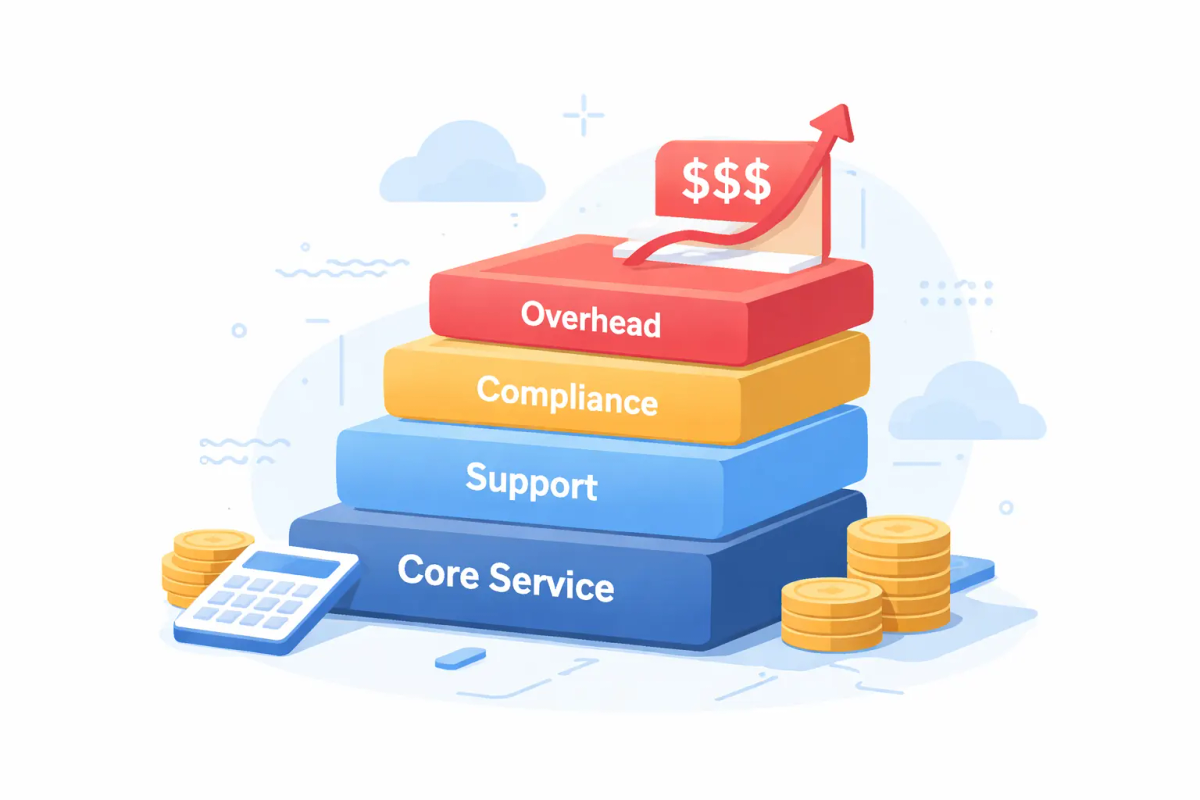
The choice of CAPTCHA solution has implications beyond security. It affects legal workflows, user experience, and operational complexity. Solutions that require extensive consent management, data transfer assessments, and ongoing legal review can increase overhead and slow down deployment. In contrast, approaches that minimize data processing can reduce these burdens and allow teams to focus on core security objectives.
User experience is another important factor. CAPTCHA systems that rely on visible challenges can introduce friction, particularly on mobile devices or for users with accessibility needs. TrustCaptcha uses an invisible approach that improves usability while maintaining protection.
Conclusion
The discussion around hCAPTCHA GDPR reflects a broader shift in the industry. Security solutions are no longer evaluated solely on effectiveness—they must also align with evolving privacy expectations.
While hCAPTCHA can be a viable tool when implemented carefully, it may introduce compliance considerations related to data processing, consent, and international transfers. For many organizations, this creates additional complexity that must be actively managed.
Privacy-conscious approaches such as TrustCaptcha demonstrate that it is possible to balance strong bot protection with reduced data processing. By leveraging proof-of-work and non-invasive scoring techniques, they offer an alternative path that aligns more closely with privacy-by-design principles.
👉 Try TrustCaptcha for free and explore how a privacy-focused CAPTCHA can support both your security and compliance goals.**