
'%3e%3crect%20width='32'%20height='24'%20fill='white'/%3e%3cpath%20fill-rule='evenodd'%20clip-rule='evenodd'%20d='M0%200V24H32V0H0Z'%20fill='%232E42A5'/%3e%3cmask%20id='mask0_270_67386'%20style='mask-type:luminance'%20maskUnits='userSpaceOnUse'%20x='0'%20y='0'%20width='32'%20height='24'%3e%3cpath%20fill-rule='evenodd'%20clip-rule='evenodd'%20d='M0%200V24H32V0H0Z'%20fill='white'/%3e%3c/mask%3e%3cg%20mask='url(%23mask0_270_67386)'%3e%3cpath%20d='M-3.56323%2022.2854L3.47846%2025.2635L32.1597%203.23787L35.874%20-1.18761L28.344%20-2.18297L16.6456%207.3085L7.22956%2013.7035L-3.56323%2022.2854Z'%20fill='white'/%3e%3cpath%20d='M-2.59924%2024.3719L0.988173%2026.1001L34.5402%20-1.59881H29.5031L-2.59924%2024.3719Z'%20fill='%23F50100'/%3e%3cpath%20d='M35.5631%2022.2854L28.5214%2025.2635L-0.159817%203.23787L-3.87415%20-1.18761L3.65593%20-2.18297L15.3543%207.3085L24.7703%2013.7035L35.5631%2022.2854Z'%20fill='white'/%3e%3cpath%20d='M35.3229%2023.7829L31.7355%2025.5111L17.4487%2013.6518L13.2129%2012.3267L-4.23151%20-1.17246H0.805637L18.2403%2012.0063L22.8713%2013.5952L35.3229%2023.7829Z'%20fill='%23F50100'/%3e%3cmask%20id='path-7-inside-1_270_67386'%20fill='white'%3e%3cpath%20fill-rule='evenodd'%20clip-rule='evenodd'%20d='M19.7777%20-2H12.2222V8H-1.97253V16H12.2222V26H19.7777V16H34.0275V8H19.7777V-2Z'/%3e%3c/mask%3e%3cpath%20fill-rule='evenodd'%20clip-rule='evenodd'%20d='M19.7777%20-2H12.2222V8H-1.97253V16H12.2222V26H19.7777V16H34.0275V8H19.7777V-2Z'%20fill='%23F50100'/%3e%3cpath%20d='M12.2222%20-2V-4H10.2222V-2H12.2222ZM19.7777%20-2H21.7777V-4H19.7777V-2ZM12.2222%208V10H14.2222V8H12.2222ZM-1.97253%208V6H-3.97253V8H-1.97253ZM-1.97253%2016H-3.97253V18H-1.97253V16ZM12.2222%2016H14.2222V14H12.2222V16ZM12.2222%2026H10.2222V28H12.2222V26ZM19.7777%2026V28H21.7777V26H19.7777ZM19.7777%2016V14H17.7777V16H19.7777ZM34.0275%2016V18H36.0275V16H34.0275ZM34.0275%208H36.0275V6H34.0275V8ZM19.7777%208H17.7777V10H19.7777V8ZM12.2222%200H19.7777V-4H12.2222V0ZM14.2222%208V-2H10.2222V8H14.2222ZM-1.97253%2010H12.2222V6H-1.97253V10ZM0.0274658%2016V8H-3.97253V16H0.0274658ZM12.2222%2014H-1.97253V18H12.2222V14ZM14.2222%2026V16H10.2222V26H14.2222ZM19.7777%2024H12.2222V28H19.7777V24ZM17.7777%2016V26H21.7777V16H17.7777ZM34.0275%2014H19.7777V18H34.0275V14ZM32.0275%208V16H36.0275V8H32.0275ZM19.7777%2010H34.0275V6H19.7777V10ZM17.7777%20-2V8H21.7777V-2H17.7777Z'%20fill='white'%20mask='url(%23path-7-inside-1_270_67386)'/%3e%3c/g%3e%3c/g%3e%3cdefs%3e%3cclipPath%20id='clip0_270_67386'%3e%3crect%20width='32'%20height='24'%20fill='white'/%3e%3c/clipPath%3e%3c/defs%3e%3c/svg%3e)
'%3e%3crect%20width='32'%20height='24'%20fill='white'/%3e%3cpath%20fill-rule='evenodd'%20clip-rule='evenodd'%20d='M0%2016H32V24H0V16Z'%20fill='%23FFD018'/%3e%3cpath%20fill-rule='evenodd'%20clip-rule='evenodd'%20d='M0%208H32V16H0V8Z'%20fill='%23E31D1C'/%3e%3cpath%20fill-rule='evenodd'%20clip-rule='evenodd'%20d='M0%200H32V8H0V0Z'%20fill='%23272727'/%3e%3c/g%3e%3cdefs%3e%3cclipPath%20id='clip0_270_67353'%3e%3crect%20width='32'%20height='24'%20fill='white'/%3e%3c/clipPath%3e%3c/defs%3e%3c/svg%3e)
'%3e%3crect%20width='32'%20height='24'%20fill='white'/%3e%3cpath%20fill-rule='evenodd'%20clip-rule='evenodd'%20d='M22%200H32V24H22V0Z'%20fill='%23F50100'/%3e%3cpath%20fill-rule='evenodd'%20clip-rule='evenodd'%20d='M0%200H12V24H0V0Z'%20fill='%232E42A5'/%3e%3cpath%20fill-rule='evenodd'%20clip-rule='evenodd'%20d='M10%200H22V24H10V0Z'%20fill='%23F7FCFF'/%3e%3c/g%3e%3cdefs%3e%3cclipPath%20id='clip0_270_67361'%3e%3crect%20width='32'%20height='24'%20fill='white'/%3e%3c/clipPath%3e%3c/defs%3e%3c/svg%3e)

Introduction
Google reCAPTCHA has become a default security mechanism for protecting websites against spam, credential stuffing, and automated abuse. From login forms to checkout pages, it is widely embedded across the modern web and often activated with little consideration beyond technical convenience.
However, for EU-based website operators, developers, and compliance officers, the growing focus on data protection raises an unavoidable question: Is Google reCAPTCHA GDPR compliant?
The General Data Protection Regulation (GDPR) imposes strict requirements on how personal data is collected, processed, transferred, and disclosed. Tools that silently analyze user behavior, set cookies, or transmit data outside the EU must be assessed carefully. In this context, reCAPTCHA has attracted increasing scrutiny from privacy regulators and legal practitioners across Europe.
What Is Google reCAPTCHA?
CAPTCHA and Bot Protection Explained
CAPTCHA (“Completely Automated Public Turing test to tell Computers and Humans Apart”) systems are designed to prevent automated software from abusing online services. Traditional CAPTCHAs rely on explicit challenges such as distorted text or image puzzles.
How Google reCAPTCHA Works
Developed by Google, reCAPTCHA uses behavioral analysis rather than explicit challenges alone. Its core purpose is to assess whether a website visitor behaves like a human or a bot.
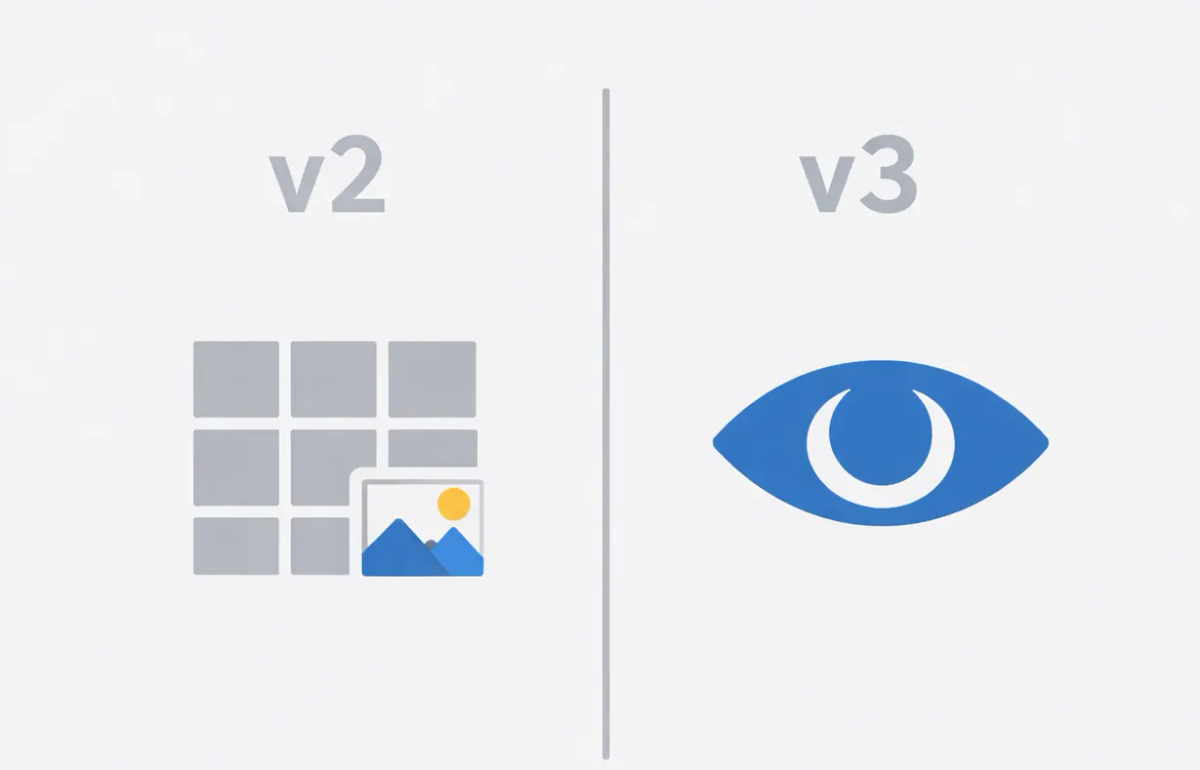
reCAPTCHA v2 vs reCAPTCHA v3
reCAPTCHA v2
- Checkbox (“I’m not a robot”)
- Image-based challenges when risk is detected
reCAPTCHA v3
- Invisible to users
- Continuously monitors behavior and assigns a risk score
Bot Detection Mechanisms
reCAPTCHA evaluates multiple signals, including:
- Mouse movement patterns
- Interaction timing
- Browser and device characteristics
- Previous browsing behavior
While effective for security, these techniques raise important data protection questions under GDPR.
GDPR & Google reCAPTCHA – What Data Is Processed?
Personal Data Under GDPR
GDPR defines personal data broadly. Information does not need to identify a person by name to fall within its scope.
Data Potentially Processed by reCAPTCHA
Depending on implementation and configuration, reCAPTCHA may process:
- IP addresses
- Device and browser metadata
- Referrer URLs
- Interaction and behavioral signals
- Cookies or local storage identifiers
When combined, these elements can contribute to user profiling or fingerprinting, which have to be assessed carefully under GDPR.
Behavioral Analysis and Risk Scoring
reCAPTCHA’s core functionality relies on behavioral profiling to assign risk scores. From a GDPR perspective, this constitutes automated data processing that influences user experience (e.g., blocking or allowing form submission).
Transparency Obligations (Article 13 GDPR)
Website operators must inform users about:
- What data is collected
- For what purpose
- Who receives the data
In practice, many privacy policies do not adequately explain reCAPTCHA’s data flows, creating compliance gaps.
Is Google reCAPTCHA GDPR Compliant?
A Critical Assessment
Google does not position reCAPTCHA as a GDPR compliance tool. Instead, compliance responsibility lies primarily with the website operator acting as data controller.
Key compliance challenges include:
- Limited control over data processing
- Lack of granular configuration options
- Dependence on Google’s infrastructure and policies
Legal Basis for Processing (Article 6 GDPR)
Two legal bases are typically invoked:
Consent
- Requires prior, informed, and freely given user consent
- Difficult to obtain for invisible background processing
Legitimate Interest
- Frequently cited but legally contested
- Requires balancing security interests against user privacy
- Increasingly questioned by EU data protection authorities
Regulatory Signals in the EU
While positions vary, several European regulators have signaled that reCAPTCHA:
- Requires clear consent mechanisms
- May not be justifiable solely on legitimate interest
- Raises concerns when loaded before consent is obtained
This regulatory landscape creates uncertainty for EU-based organizations.
Cookies, Consent & User Experience
Cookie and Storage Access
reCAPTCHA may:
- Set cookies
- Access existing Google cookies
- Use browser storage for risk assessment
Under EU ePrivacy rules, such access often requires prior consent, not merely disclosure.
Consent Banner Challenges
Integrating reCAPTCHA compliantly often means:
- Blocking it until consent is granted
- Providing detailed explanations in cookie banners
- Handling refusal gracefully
This complexity frequently undermines usability.
Accessibility and UX Concerns
- Image challenges may exclude visually impaired users
- Behavioral scoring can wrongly block legitimate users
- Invisible scoring reduces user awareness and control
International Data Transfers & Schrems II
Data Transfers to the United States
reCAPTCHA involves data transfers to servers operated by Google, often outside the EU.
Post-Schrems II Legal Context
Following the Schrems II ruling, EU organizations must ensure that transferred data receives essentially equivalent protection.
Challenges include:
- US surveillance laws
- Limited transparency around access by authorities
- Reliance on contractual safeguards alone
Legal Uncertainty for Website Operators
Even with updated transfer frameworks, many compliance experts consider reCAPTCHA a residual risk for EU-focused websites.
Risks & Penalties for Website Operators
Potential GDPR Consequences
Non-compliance may lead to:
- Administrative fines (up to 4% of global turnover)
- Enforcement actions by data protection authorities
- Complaints from privacy-conscious users
Controller Responsibilities
Website operators must:
- Assess tools they embed
- Document legal bases
- Implement privacy-by-design principles
Using third-party tools does not transfer responsibility.
GDPR-Compliant Alternatives to Google reCAPTCHA
Why Consider Alternatives?
EU organizations increasingly seek privacy-friendly CAPTCHA solutions that:
- Minimize personal data processing
- Avoid cookies and tracking
- Operate entirely within the EU
Introducing TrustCaptcha
TrustCaptcha is designed specifically to address GDPR and EU privacy requirements.
How TrustCaptcha Works
TrustCaptcha focuses on challenge-based verification rather than behavioral profiling.
Core design principles include:
- No cross-site tracking
- No persistent browser identifiers
- No behavioral fingerprinting
Privacy-by-Design Mechanisms
TrustCaptcha emphasizes:
- No cookies
- No persistent browser storage
- Minimal data processing
- EU-based infrastructure
This architecture significantly reduces GDPR exposure while maintaining effective bot protection.
Security Without Surveillance
Instead of profiling users, TrustCaptcha:
- Uses contextual challenge logic
- Limits data to what is strictly necessary
- Avoids invisible background monitoring
Conclusion
From a GDPR perspective, Google reCAPTCHA presents significant compliance challenges for EU website operators. While widely used and technically effective, its reliance on behavioral analysis, cookies, and international data transfers creates legal uncertainty—particularly in light of evolving regulatory expectations.
For organizations operating in the EU, privacy-friendly CAPTCHA solutions are increasingly preferable. Alternatives such as TrustCaptcha demonstrate that effective bot protection does not require intrusive tracking or opaque data processing.
Evaluating GDPR-compliant CAPTCHA options is no longer just a legal exercise—it is a strategic decision affecting trust, usability, and long-term risk management.
Next steps
👉 Try TrustCaptcha for free. You can run a short pilot in under 30 minutes to compare bot mitigation and form completion rates with your own traffic.