
'%3e%3crect%20width='32'%20height='24'%20fill='white'/%3e%3cpath%20fill-rule='evenodd'%20clip-rule='evenodd'%20d='M0%200V24H32V0H0Z'%20fill='%232E42A5'/%3e%3cmask%20id='mask0_270_67386'%20style='mask-type:luminance'%20maskUnits='userSpaceOnUse'%20x='0'%20y='0'%20width='32'%20height='24'%3e%3cpath%20fill-rule='evenodd'%20clip-rule='evenodd'%20d='M0%200V24H32V0H0Z'%20fill='white'/%3e%3c/mask%3e%3cg%20mask='url(%23mask0_270_67386)'%3e%3cpath%20d='M-3.56323%2022.2854L3.47846%2025.2635L32.1597%203.23787L35.874%20-1.18761L28.344%20-2.18297L16.6456%207.3085L7.22956%2013.7035L-3.56323%2022.2854Z'%20fill='white'/%3e%3cpath%20d='M-2.59924%2024.3719L0.988173%2026.1001L34.5402%20-1.59881H29.5031L-2.59924%2024.3719Z'%20fill='%23F50100'/%3e%3cpath%20d='M35.5631%2022.2854L28.5214%2025.2635L-0.159817%203.23787L-3.87415%20-1.18761L3.65593%20-2.18297L15.3543%207.3085L24.7703%2013.7035L35.5631%2022.2854Z'%20fill='white'/%3e%3cpath%20d='M35.3229%2023.7829L31.7355%2025.5111L17.4487%2013.6518L13.2129%2012.3267L-4.23151%20-1.17246H0.805637L18.2403%2012.0063L22.8713%2013.5952L35.3229%2023.7829Z'%20fill='%23F50100'/%3e%3cmask%20id='path-7-inside-1_270_67386'%20fill='white'%3e%3cpath%20fill-rule='evenodd'%20clip-rule='evenodd'%20d='M19.7777%20-2H12.2222V8H-1.97253V16H12.2222V26H19.7777V16H34.0275V8H19.7777V-2Z'/%3e%3c/mask%3e%3cpath%20fill-rule='evenodd'%20clip-rule='evenodd'%20d='M19.7777%20-2H12.2222V8H-1.97253V16H12.2222V26H19.7777V16H34.0275V8H19.7777V-2Z'%20fill='%23F50100'/%3e%3cpath%20d='M12.2222%20-2V-4H10.2222V-2H12.2222ZM19.7777%20-2H21.7777V-4H19.7777V-2ZM12.2222%208V10H14.2222V8H12.2222ZM-1.97253%208V6H-3.97253V8H-1.97253ZM-1.97253%2016H-3.97253V18H-1.97253V16ZM12.2222%2016H14.2222V14H12.2222V16ZM12.2222%2026H10.2222V28H12.2222V26ZM19.7777%2026V28H21.7777V26H19.7777ZM19.7777%2016V14H17.7777V16H19.7777ZM34.0275%2016V18H36.0275V16H34.0275ZM34.0275%208H36.0275V6H34.0275V8ZM19.7777%208H17.7777V10H19.7777V8ZM12.2222%200H19.7777V-4H12.2222V0ZM14.2222%208V-2H10.2222V8H14.2222ZM-1.97253%2010H12.2222V6H-1.97253V10ZM0.0274658%2016V8H-3.97253V16H0.0274658ZM12.2222%2014H-1.97253V18H12.2222V14ZM14.2222%2026V16H10.2222V26H14.2222ZM19.7777%2024H12.2222V28H19.7777V24ZM17.7777%2016V26H21.7777V16H17.7777ZM34.0275%2014H19.7777V18H34.0275V14ZM32.0275%208V16H36.0275V8H32.0275ZM19.7777%2010H34.0275V6H19.7777V10ZM17.7777%20-2V8H21.7777V-2H17.7777Z'%20fill='white'%20mask='url(%23path-7-inside-1_270_67386)'/%3e%3c/g%3e%3c/g%3e%3cdefs%3e%3cclipPath%20id='clip0_270_67386'%3e%3crect%20width='32'%20height='24'%20fill='white'/%3e%3c/clipPath%3e%3c/defs%3e%3c/svg%3e)
'%3e%3crect%20width='32'%20height='24'%20fill='white'/%3e%3cpath%20fill-rule='evenodd'%20clip-rule='evenodd'%20d='M0%2016H32V24H0V16Z'%20fill='%23FFD018'/%3e%3cpath%20fill-rule='evenodd'%20clip-rule='evenodd'%20d='M0%208H32V16H0V8Z'%20fill='%23E31D1C'/%3e%3cpath%20fill-rule='evenodd'%20clip-rule='evenodd'%20d='M0%200H32V8H0V0Z'%20fill='%23272727'/%3e%3c/g%3e%3cdefs%3e%3cclipPath%20id='clip0_270_67353'%3e%3crect%20width='32'%20height='24'%20fill='white'/%3e%3c/clipPath%3e%3c/defs%3e%3c/svg%3e)
'%3e%3crect%20width='32'%20height='24'%20fill='white'/%3e%3cpath%20fill-rule='evenodd'%20clip-rule='evenodd'%20d='M22%200H32V24H22V0Z'%20fill='%23F50100'/%3e%3cpath%20fill-rule='evenodd'%20clip-rule='evenodd'%20d='M0%200H12V24H0V0Z'%20fill='%232E42A5'/%3e%3cpath%20fill-rule='evenodd'%20clip-rule='evenodd'%20d='M10%200H22V24H10V0Z'%20fill='%23F7FCFF'/%3e%3c/g%3e%3cdefs%3e%3cclipPath%20id='clip0_270_67361'%3e%3crect%20width='32'%20height='24'%20fill='white'/%3e%3c/clipPath%3e%3c/defs%3e%3c/svg%3e)
Understanding Fake Account Creation and Why It Is Increasing
Fake account creation has become a systemic problem for digital platforms. Registration flows are designed to be frictionless for real users, but this convenience also makes them an attractive target for abuse.
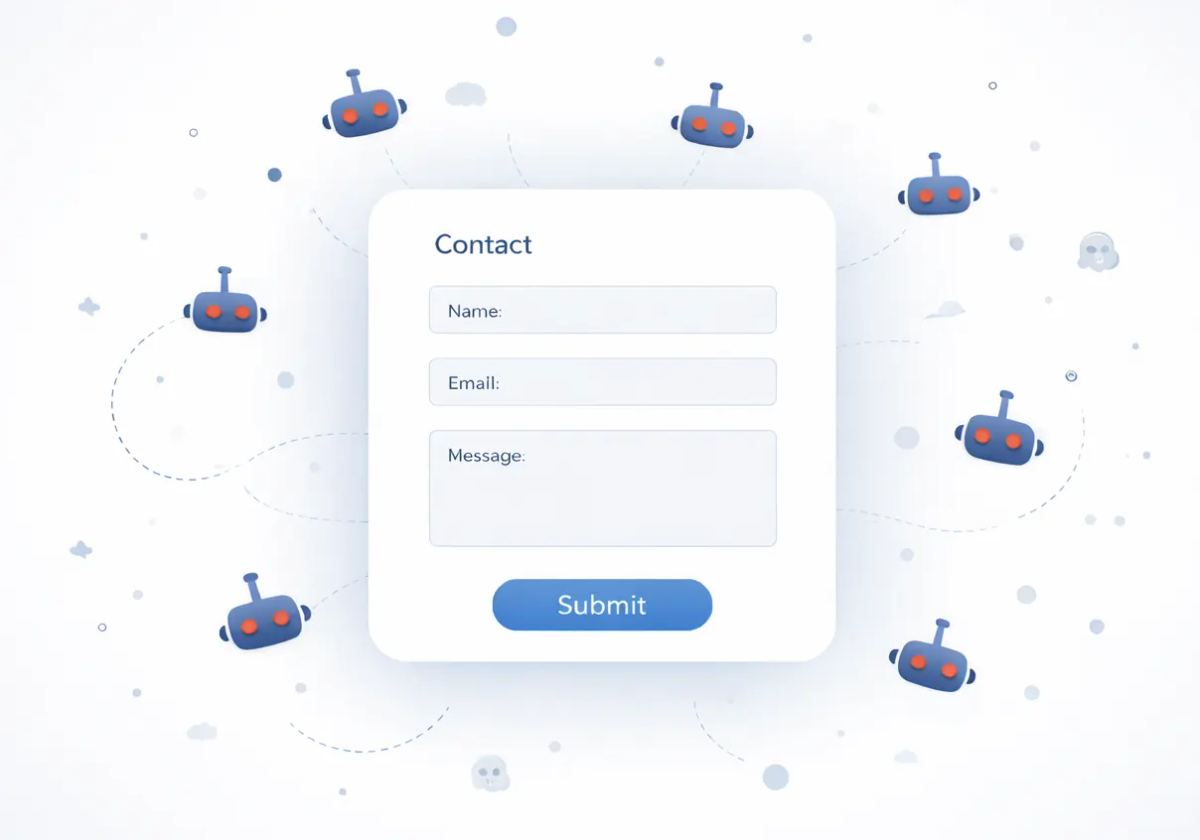
Fake account creation describes the act of registering accounts using fabricated, stolen, or synthetic identities, often with malicious intent. These accounts are rarely created in isolation. Instead, attackers rely on automation to generate large volumes of accounts in a short time.
Advances in automation tools, headless browsers, and proxy networks have made fake account creation faster, cheaper, and harder to detect. For IT professionals and security leaders, this trend represents a growing operational and cybersecurity challenge.

Why Fake Account Creation Is Bad for Businesses
Fake account creation has consequences that extend far beyond nuisance or inflated user numbers. At a business level, fake accounts enable abuse of free trials, referral programs, and promotional incentives, directly impacting revenue.
Operationally, fake accounts pollute databases and analytics, leading to inaccurate reporting and poor decision-making. Teams may waste time engaging with fake users or chasing fraudulent leads.
From a security perspective, fake accounts are often used as a staging ground for further attacks, including phishing campaigns, account takeover, and financial fraud. In regulated industries, weak controls around account creation can also expose organizations to compliance and audit risks.
How Fake Account Creation Works
Fake account creation typically follows a structured process that attackers repeat at scale.
1. Data Gathering
Attackers first collect or generate identity data needed to pass registration checks. This may include stolen credentials from breaches, synthetic identities, or disposable email addresses and virtual phone numbers.
2. Automation and Evasion
To create accounts efficiently, attackers use bots, scripts, and headless browsers that automatically fill out registration forms. Proxies and VPNs are used to rotate IP addresses, while anti-detect tools spoof device fingerprints to evade detection.
3. Account Deployment
Once created, fake accounts are either used immediately or left dormant to appear legitimate. They are then deployed for spam, fraud, manipulation, or resale.
Fake Account Prevention Strategies
Preventing fake account creation requires a layered defense strategy. No single control can stop all abuse, especially as attackers continuously adapt their techniques.
Technical controls such as rate limiting and IP reputation checks can slow down basic attacks, but they are often ineffective against distributed and sophisticated automation. Identity verification methods like email confirmation or multi-factor authentication help validate real users, yet they do not prevent bots from submitting registration forms at scale.
Behavioral analysis and monitoring can identify suspicious patterns after accounts are created, but these approaches are reactive and may raise privacy concerns. To be effective, defenses must stop automated abuse before accounts enter the system.
CAPTCHA as a Core Tool to Prevent Fake Account Creation
CAPTCHA solutions are designed specifically to distinguish humans from automated programs during critical interactions like account registration. When implemented correctly, CAPTCHA blocks automated signups early in the user journey, reducing downstream fraud and operational cost.
Modern CAPTCHA approaches focus on invisible challenges that protect usability and accessibility while making automation economically unviable. This makes CAPTCHA a foundational control in any strategy to prevent fake account creation.
How TrustCaptcha Prevents Fake Account Creation
TrustCaptcha is a modern CAPTCHA solution built to stop automated fake account creation without relying on invasive tracking or disruptive user challenges. It operates invisibly in the background and focuses on blocking abuse at the signup stage.
TrustCaptcha uses a proof-of-work mechanism that requires the user’s device to perform a small computational task. For legitimate users, this happens instantly and without interaction. For bots attempting to create accounts at scale, the cumulative computational cost becomes prohibitive, effectively stopping automation.
In parallel, TrustCaptcha assigns a bot score to each signup attempt based on technical signals. This score allows organizations to apply risk-based controls. Low-risk traffic proceeds seamlessly, while higher-risk traffic can be routed through additional measures such as multi-factor authentication or enhanced monitoring.
This architecture enables TrustCaptcha to act as the first line of defense against fake account creation. CAPTCHA protection and bot scoring stop automated abuse early, while downstream controls are applied only when justified by risk. The result is strong security, high conversion rates, and compliance with modern privacy expectations.
Conclusion
Fake account creation is a growing and costly threat that undermines security, data quality, and trust. Preventing it requires proactive controls that stop automation before accounts are created.
CAPTCHA remains a cornerstone of effective defense, and TrustCaptcha represents a modern, privacy-first approach. By combining proof-of-work and bot scoring, TrustCaptcha helps organizations prevent fake account creation without compromising user experience.
👉 Try TrustCaptcha for free and see how it protects your signup flows from automated abuse.