
'%3e%3crect%20width='32'%20height='24'%20fill='white'/%3e%3cpath%20fill-rule='evenodd'%20clip-rule='evenodd'%20d='M0%200V24H32V0H0Z'%20fill='%232E42A5'/%3e%3cmask%20id='mask0_270_67386'%20style='mask-type:luminance'%20maskUnits='userSpaceOnUse'%20x='0'%20y='0'%20width='32'%20height='24'%3e%3cpath%20fill-rule='evenodd'%20clip-rule='evenodd'%20d='M0%200V24H32V0H0Z'%20fill='white'/%3e%3c/mask%3e%3cg%20mask='url(%23mask0_270_67386)'%3e%3cpath%20d='M-3.56323%2022.2854L3.47846%2025.2635L32.1597%203.23787L35.874%20-1.18761L28.344%20-2.18297L16.6456%207.3085L7.22956%2013.7035L-3.56323%2022.2854Z'%20fill='white'/%3e%3cpath%20d='M-2.59924%2024.3719L0.988173%2026.1001L34.5402%20-1.59881H29.5031L-2.59924%2024.3719Z'%20fill='%23F50100'/%3e%3cpath%20d='M35.5631%2022.2854L28.5214%2025.2635L-0.159817%203.23787L-3.87415%20-1.18761L3.65593%20-2.18297L15.3543%207.3085L24.7703%2013.7035L35.5631%2022.2854Z'%20fill='white'/%3e%3cpath%20d='M35.3229%2023.7829L31.7355%2025.5111L17.4487%2013.6518L13.2129%2012.3267L-4.23151%20-1.17246H0.805637L18.2403%2012.0063L22.8713%2013.5952L35.3229%2023.7829Z'%20fill='%23F50100'/%3e%3cmask%20id='path-7-inside-1_270_67386'%20fill='white'%3e%3cpath%20fill-rule='evenodd'%20clip-rule='evenodd'%20d='M19.7777%20-2H12.2222V8H-1.97253V16H12.2222V26H19.7777V16H34.0275V8H19.7777V-2Z'/%3e%3c/mask%3e%3cpath%20fill-rule='evenodd'%20clip-rule='evenodd'%20d='M19.7777%20-2H12.2222V8H-1.97253V16H12.2222V26H19.7777V16H34.0275V8H19.7777V-2Z'%20fill='%23F50100'/%3e%3cpath%20d='M12.2222%20-2V-4H10.2222V-2H12.2222ZM19.7777%20-2H21.7777V-4H19.7777V-2ZM12.2222%208V10H14.2222V8H12.2222ZM-1.97253%208V6H-3.97253V8H-1.97253ZM-1.97253%2016H-3.97253V18H-1.97253V16ZM12.2222%2016H14.2222V14H12.2222V16ZM12.2222%2026H10.2222V28H12.2222V26ZM19.7777%2026V28H21.7777V26H19.7777ZM19.7777%2016V14H17.7777V16H19.7777ZM34.0275%2016V18H36.0275V16H34.0275ZM34.0275%208H36.0275V6H34.0275V8ZM19.7777%208H17.7777V10H19.7777V8ZM12.2222%200H19.7777V-4H12.2222V0ZM14.2222%208V-2H10.2222V8H14.2222ZM-1.97253%2010H12.2222V6H-1.97253V10ZM0.0274658%2016V8H-3.97253V16H0.0274658ZM12.2222%2014H-1.97253V18H12.2222V14ZM14.2222%2026V16H10.2222V26H14.2222ZM19.7777%2024H12.2222V28H19.7777V24ZM17.7777%2016V26H21.7777V16H17.7777ZM34.0275%2014H19.7777V18H34.0275V14ZM32.0275%208V16H36.0275V8H32.0275ZM19.7777%2010H34.0275V6H19.7777V10ZM17.7777%20-2V8H21.7777V-2H17.7777Z'%20fill='white'%20mask='url(%23path-7-inside-1_270_67386)'/%3e%3c/g%3e%3c/g%3e%3cdefs%3e%3cclipPath%20id='clip0_270_67386'%3e%3crect%20width='32'%20height='24'%20fill='white'/%3e%3c/clipPath%3e%3c/defs%3e%3c/svg%3e)
'%3e%3crect%20width='32'%20height='24'%20fill='white'/%3e%3cpath%20fill-rule='evenodd'%20clip-rule='evenodd'%20d='M0%2016H32V24H0V16Z'%20fill='%23FFD018'/%3e%3cpath%20fill-rule='evenodd'%20clip-rule='evenodd'%20d='M0%208H32V16H0V8Z'%20fill='%23E31D1C'/%3e%3cpath%20fill-rule='evenodd'%20clip-rule='evenodd'%20d='M0%200H32V8H0V0Z'%20fill='%23272727'/%3e%3c/g%3e%3cdefs%3e%3cclipPath%20id='clip0_270_67353'%3e%3crect%20width='32'%20height='24'%20fill='white'/%3e%3c/clipPath%3e%3c/defs%3e%3c/svg%3e)
'%3e%3crect%20width='32'%20height='24'%20fill='white'/%3e%3cpath%20fill-rule='evenodd'%20clip-rule='evenodd'%20d='M22%200H32V24H22V0Z'%20fill='%23F50100'/%3e%3cpath%20fill-rule='evenodd'%20clip-rule='evenodd'%20d='M0%200H12V24H0V0Z'%20fill='%232E42A5'/%3e%3cpath%20fill-rule='evenodd'%20clip-rule='evenodd'%20d='M10%200H22V24H10V0Z'%20fill='%23F7FCFF'/%3e%3c/g%3e%3cdefs%3e%3cclipPath%20id='clip0_270_67361'%3e%3crect%20width='32'%20height='24'%20fill='white'/%3e%3c/clipPath%3e%3c/defs%3e%3c/svg%3e)
Introduction: uptime, SLAs and what they promise
Every team that runs a website, an API or a SaaS product gets asked the same question sooner or later: how reliable is it? Uptime is the number that answers it, and an SLA is the document that turns that number into a commitment.
This guide explains what uptime is, how SLA uptime and availability SLAs work, what the familiar “nines” mean in practice, and how you can measure your own uptime so every SLA conversation starts from real data.
What is uptime?
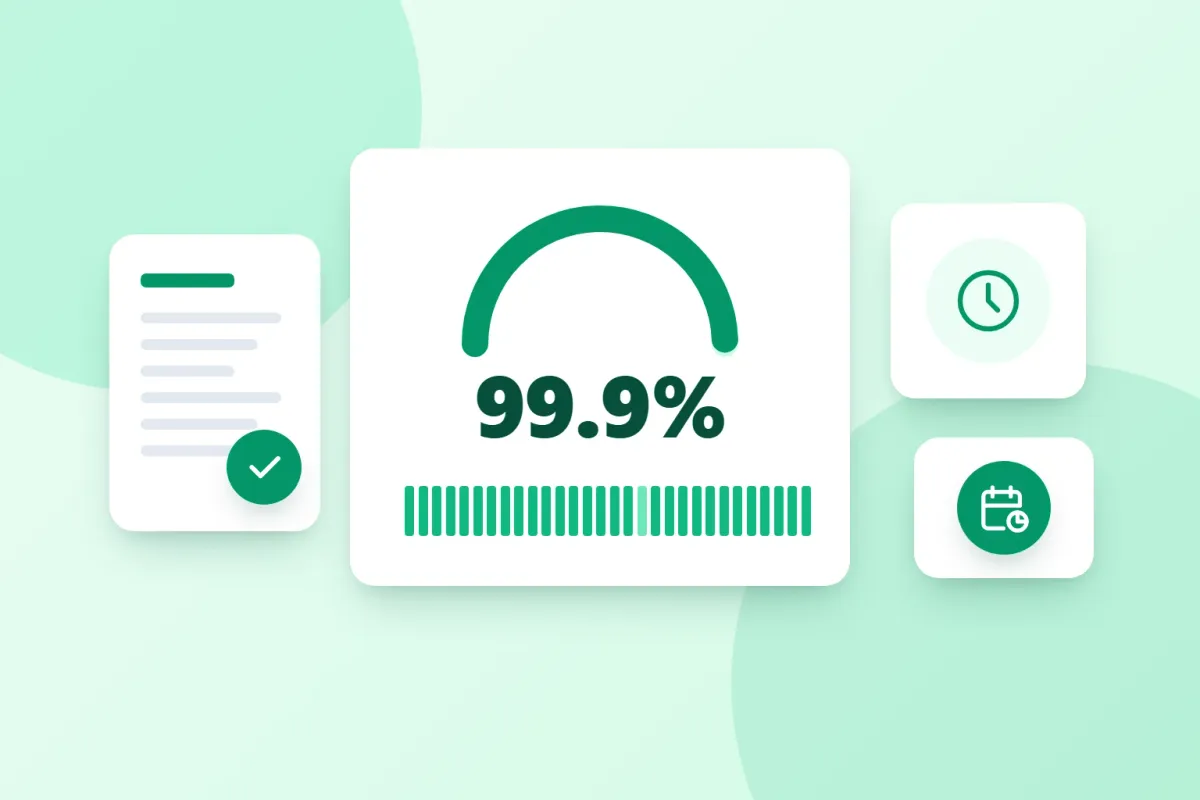
Uptime is the share of time a service is available to its users, usually expressed as a percentage over a month or a year. If a service was unavailable for 43 minutes in a 30-day month, its uptime for that month was 99.9%.
Uptime vs availability
In everyday use, uptime and availability mean the same thing. There is a useful distinction, though:
- Uptime often describes whether a system is running: a server that has not rebooted, a process that has not crashed.
- Availability describes whether users can actually use the service: the website loads, the API answers correctly, the checkout completes.
A server can be up for months while the website on it returns errors. That is why availability, measured from the outside, is the number customers care about.
What is website uptime?
Website uptime is the availability of a website as its visitors experience it: the page responds, returns the expected content and answers within an acceptable time. It is measured by checking the site from outside at regular intervals, ideally from several locations.
What the nines mean in practice
Uptime targets are often described by their number of nines. Each additional nine reduces the allowed downtime by a factor of ten:
| Availability target | Downtime per 30-day month | Downtime per year |
|---|---|---|
| 99% | 7 h 12 min | 3 d 15 h 36 min |
| 99.5% | 3 h 36 min | 1 d 19 h 48 min |
| 99.9% | 43 min 12 s | 8 h 45 min 36 s |
| 99.95% | 21 min 36 s | 4 h 22 min 48 s |
| 99.99% | 4 min 19 s | 52 min 34 s |
| 99.999% | 26 s | 5 min 15 s |
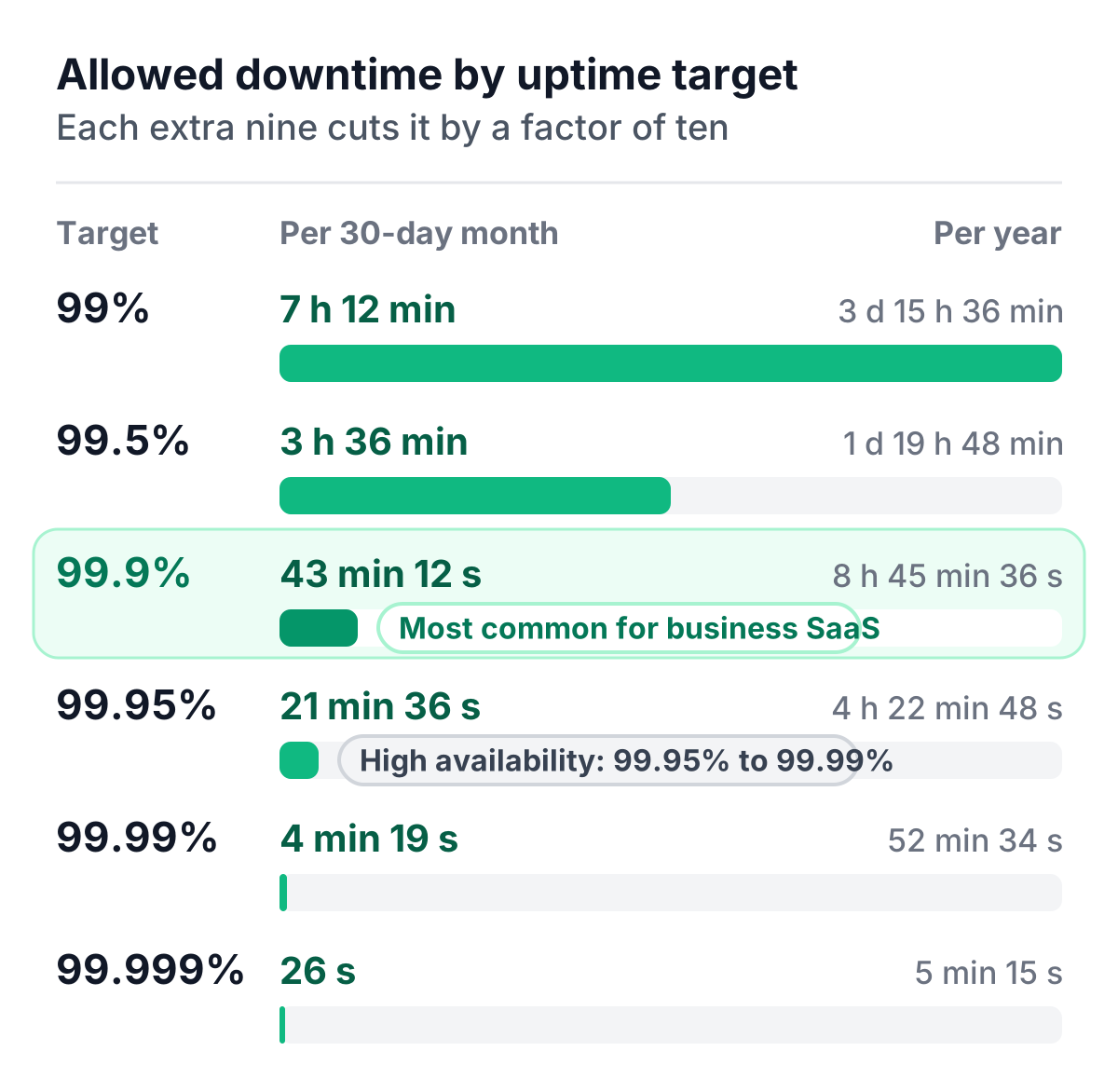
So 99.9% availability means a service may be unavailable for about 43 minutes per month. That is enough room for one short incident, but not for a long one.
What is an SLA uptime commitment?
A service level agreement (SLA) is the part of a contract that defines the level of service a provider commits to. Service level agreement uptime is usually its centerpiece: a target such as 99.9% per month, plus the rules that make the number meaningful.
What an availability SLA defines
A clear availability SLA answers these questions, whether it is a service availability SLA or a system availability SLA:
- Target and window: which percentage, measured per month, quarter or year?
- Definition of downtime: does a partial outage or a degraded service count? Does a single failing region count?
- Exclusions: are announced maintenance windows excluded? What about problems caused by the customer?
- Measurement source: whose monitoring decides: the provider’s, the customer’s or an independent one?
- Service credits: what does the customer receive if the target is missed, and how is it claimed?
- Reporting: how and when is uptime reported?
SLA percentage and the measurement window
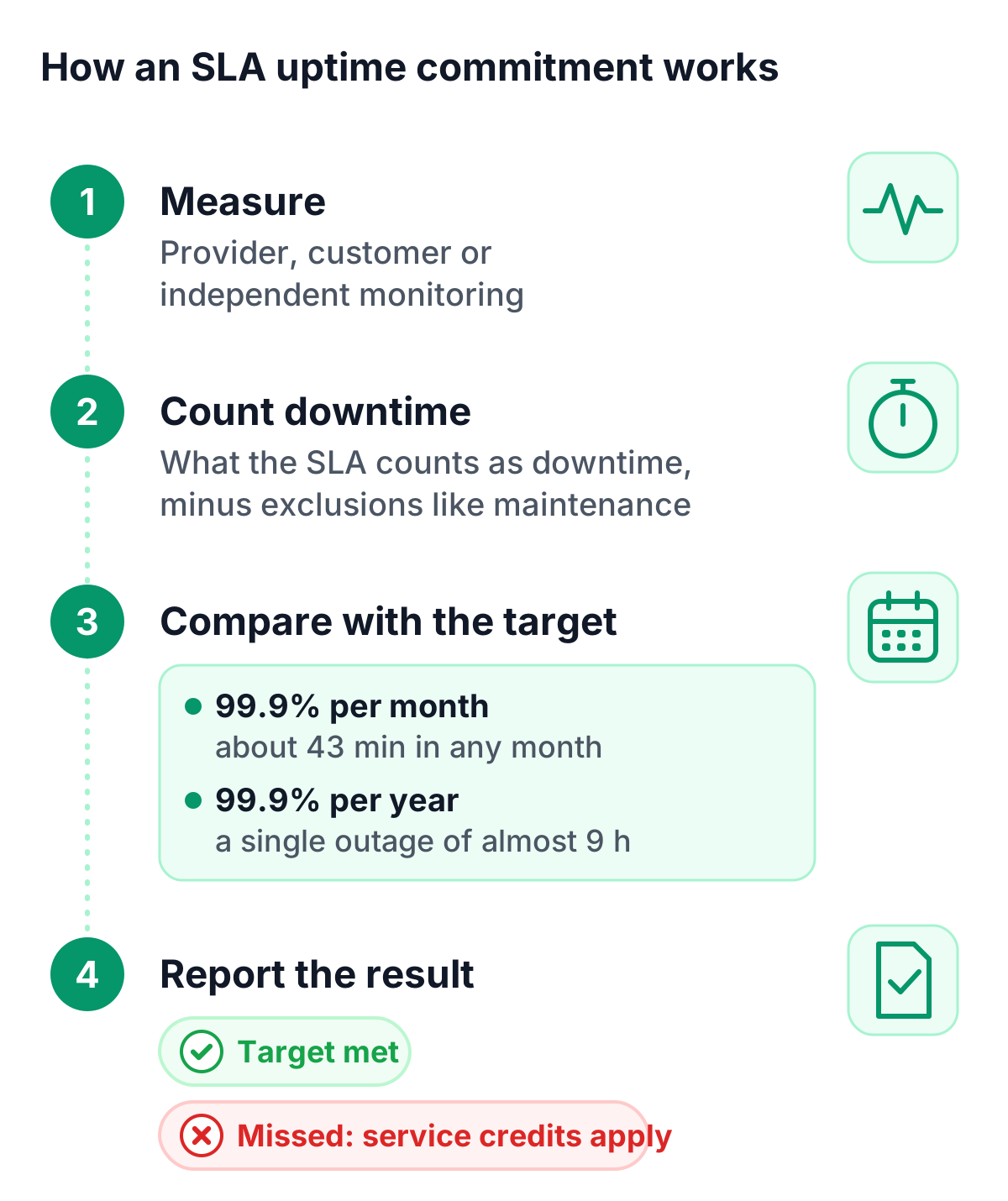
The SLA percentage alone tells only half the story. The measurement window changes what it allows: 99.9% per year permits a single outage of almost nine hours, while 99.9% per month caps any single month at about 43 minutes. Monthly windows are common in SaaS contracts because they are easier to verify and to discuss.
What guaranteed uptime really means
Guaranteed uptime does not mean a service never goes down. An uptime guarantee is a commitment backed by consequences (typically service credits) that defines what happens when the target is missed. For customers, the most valuable part of a guarantee is often the transparency that comes with it: clear reporting and clear communication during incidents.
Is there an industry standard uptime SLA?
There is no single industry standard uptime SLA, but there are common ranges:
- 99.9% per month is the most common level for business SaaS products and a typical SaaS uptime SLA.
- High availability SLAs of 99.95% to 99.99% need redundant infrastructure, often across several data centers or regions. Providers price that in, so expect to pay more. They are typical for platforms that other businesses build on, such as infrastructure, payment or communication services.
- Beyond 99.99%, each extra nine multiplies the effort for redundancy and on-call response, and the price rises with it.
A standard uptime SLA that fits your product is one you can measure, report and explain, so choose a target that matches your architecture and your customers’ expectations.
How to measure uptime for your own SLA
Whether you provide an SLA or rely on one, your own measurements make every conversation easier. A reliable setup has five ingredients:
- External checks. Measure from outside your infrastructure, the way users reach your service.
- Several locations. Checks from more than one region show regional issues and avoid blind spots.
- Short intervals. The shorter the interval, the more precise your downtime figures.
- Confirmation thresholds. Require consecutive failures before counting downtime, so a single network hiccup does not distort your numbers.
- Maintenance windows and reports. Exclude announced maintenance if your SLA does, and produce a monthly report you can share.
Measuring uptime with TrustComponent Monitoring
TrustComponent Monitoring provides website and uptime monitoring built for exactly this:
- Checks as often as every 30 seconds, from multiple locations
- Configurable confirmation thresholds and maintenance windows that keep uptime statistics clean
- Automatic monthly uptime reports with uptime to three decimals, total downtime and incidents, plus on-demand reports for any period up to a year
- A hosted status page with 90-day uptime history, so customers can see your track record themselves
All monitoring data is stored and processed in the EU, with a GDPR data processing agreement you can sign online.
Conclusion: make your uptime visible
Uptime is a simple number with a lot behind it. An SLA gives it a clear definition, and your own monitoring gives it credibility. When you measure availability from the outside and report it every month, SLA reviews become straightforward, and your reliability becomes something you can show, not just promise.
Get started
👉 Start a free trial of TrustComponent Monitoring and get your first uptime report at the end of the month.