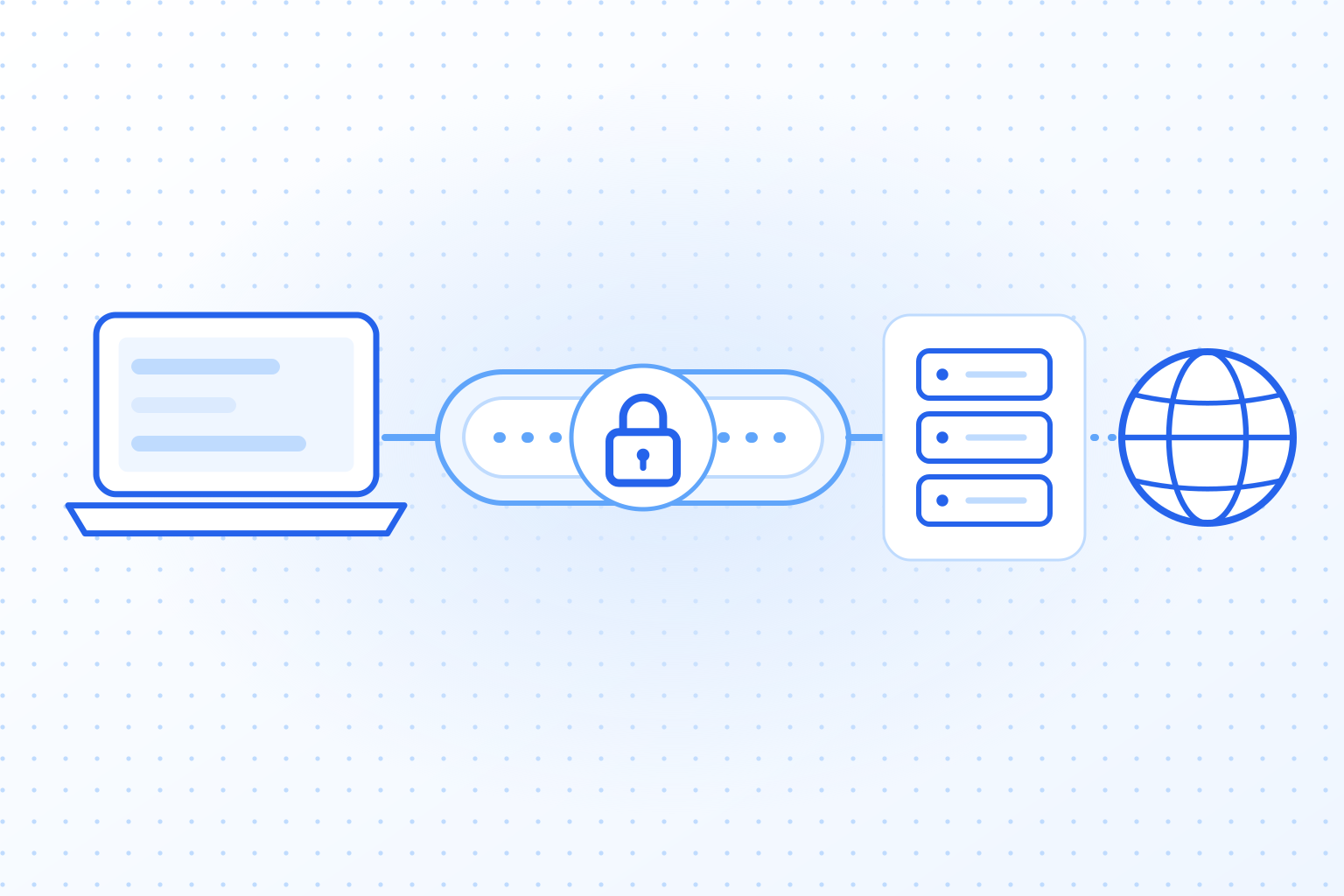
Introduction to cryptography and encryption
What is cryptography?
Cryptography is the science of securely transmitting information. The term originates from the Greek language and means “secret writing.” Even in ancient times, techniques such as the Caesar cipher, which systematically shifted letters in the alphabet, were used. Such simple methods are easy to break today, and modern encryption techniques have little in common with them. Cryptography now sits wherever security and privacy matter: in encrypted messaging, in online banking and in government intelligence services.
Why is encryption important?
The more of daily life moves online, the more data there is to steal. Without cryptography, cybercriminals could easily read passwords, bank information or health records. Encryption keeps data unreadable to third parties while it is sent or stored. It also makes identity theft, industrial espionage and many other cyberattacks much harder. Because only authorized people can read the data, you can trust a banking app or a shop with it, and much of the digital economy depends on that.
Fundamental principles of cryptography

The security objectives of information security
Cryptography aims to protect data in four fundamental ways:
- Confidentiality: Information is accessible only to authorized persons. Encryption methods such as AES (Advanced Encryption Standard) or RSA ensure that unauthorized third parties cannot access the data.
- Integrity: Integrity guarantees that information is not altered during transmission or storage. Hash functions like SHA-256 create a kind of digital fingerprint for data, so any change shows up immediately.
- Authenticity: The sender and receiver of a message are who they claim to be. Digital signatures and certificates, often issued by trusted third parties (Certificate Authorities), are the usual way to prove this.
- Availability: Encrypted systems must stay accessible even in a crisis. Redundant servers and disaster recovery systems make sure encrypted data is not lost.
Core elements of encryption
Encryption relies on algorithms and keys:
- Algorithms: An encryption algorithm is a mathematical method that determines how data is encrypted and decrypted. Examples include AES (symmetric) and RSA (asymmetric). The strength of an algorithm depends on its mathematical structure and the length of the key used.
- Key management: Even the best algorithm is useless if the key is not secure. Keys must be protected from theft, securely stored, and regularly updated. Hardware Security Modules (HSMs) and Key Management Systems (KMS) store keys and control who may use them.
Types of encryption techniques

Symmetric encryption
Symmetric encryption is the oldest and simplest method, where the same key is used for both encryption and decryption. The Advanced Encryption Standard (AES) is the current industry standard because it is both secure and fast. You find it in wireless networks and in disk encryption. The weak spot of symmetric encryption is the key exchange: both parties need the same key, and it has to reach them safely. If the key falls into the wrong hands, the data is compromised.
Asymmetric encryption
Asymmetric encryption uses a pair of keys: a public key that can be freely distributed and a private key that remains secret. This enables secure communication without prior key exchange. RSA (Rivest-Shamir-Adleman) is the most well-known asymmetric method, although elliptic curve cryptography (ECC) is gaining popularity because it offers the same security with shorter keys. Asymmetric methods are much slower than symmetric algorithms, which is why the two are usually combined.
Hybrid encryption
Hybrid systems combine both encryption techniques. An asymmetric key exchange lets both sides agree on a shared symmetric key without ever sending it (in TLS 1.3 this is done with ECDHE), and that key then encrypts large amounts of data quickly. The best-known example is the TLS protocol behind HTTPS connections, the successor of the outdated SSL. You get the easy key exchange of asymmetric encryption and the speed of symmetric encryption, which is why almost every modern system works this way.
Cryptography in practice
Applications of encryption
Most encryption happens without you noticing it:
- Communication: Messengers like WhatsApp or Signal use end-to-end encryption to ensure that messages can only be read by the sender and recipient.
- Data storage: Companies and individuals encrypt data in the cloud to protect it from unauthorized access. Smartphones and computers also offer built-in disk encryption.
- Finance: Online banking and digital payment methods like PayPal rely on strong encryption technologies to secure sensitive financial data.
Challenges in cryptography
Cryptography still has open problems:
- Quantum computing: A task that would take classical computers far longer than a lifetime, such as breaking RSA, could become feasible for a large enough quantum computer.
- Faulty implementation: Even the most secure algorithms can be compromised by poor implementation or configuration errors. The famous Heartbleed vulnerability is an example of the risk posed by implementation flaws.
- Regulations and surveillance: Many countries attempt to regulate the use of strong encryption or introduce backdoors, endangering security and privacy.
Future developments in cryptography
Post-quantum cryptography
Quantum computers are the reason post-quantum cryptography gets so much attention. It relies on mathematical problems that are hard for quantum computers too, mostly lattice problems and hash functions. In August 2024, NIST published the first standards: ML-KEM (FIPS 203) for key exchange, and ML-DSA (FIPS 204) and SLH-DSA (FIPS 205) for digital signatures. Not every candidate held up: the isogeny-based scheme SIKE was broken in 2022 with an ordinary computer.
The switch is already under way. Chrome and Cloudflare protect TLS connections with a hybrid of classic elliptic-curve key exchange and ML-KEM, so data recorded today stays protected even if a large quantum computer arrives later.
Trends and innovations
Besides post-quantum methods, a few other developments are worth knowing:
- Blockchain: The technology behind cryptocurrencies relies on hashing and digital signatures to keep transactions transparent and hard to tamper with. Proof-of-work, the task that makes Bitcoin mining cost computing time, is a general idea that works outside cryptocurrencies too: TrustCaptcha’s CAPTCHA security concept uses its own small proof-of-work task as one layer against bots, with no blockchain or cryptocurrency involved.
- Zero-knowledge proofs: These let you prove that a piece of information is true without revealing it. One use is anonymous transactions.
- Increased automation: Encryption systems increasingly handle routine steps on their own, which leaves less room for human error.
Conclusion
Most of the encryption you rely on every day is hybrid: an asymmetric handshake, then fast symmetric encryption. The algorithms themselves are rarely the weak point. Poorly protected keys and implementation errors such as Heartbleed are the more common problem. The next big change is the move to post-quantum algorithms, and it is better to plan for it before large quantum computers exist.