Introduction
Bot attacks hit businesses and organizations of every size and industry. They use automated programs (bots) to harm websites, networks and online services, for example by overloading servers, stealing data or manipulating content and advertising.
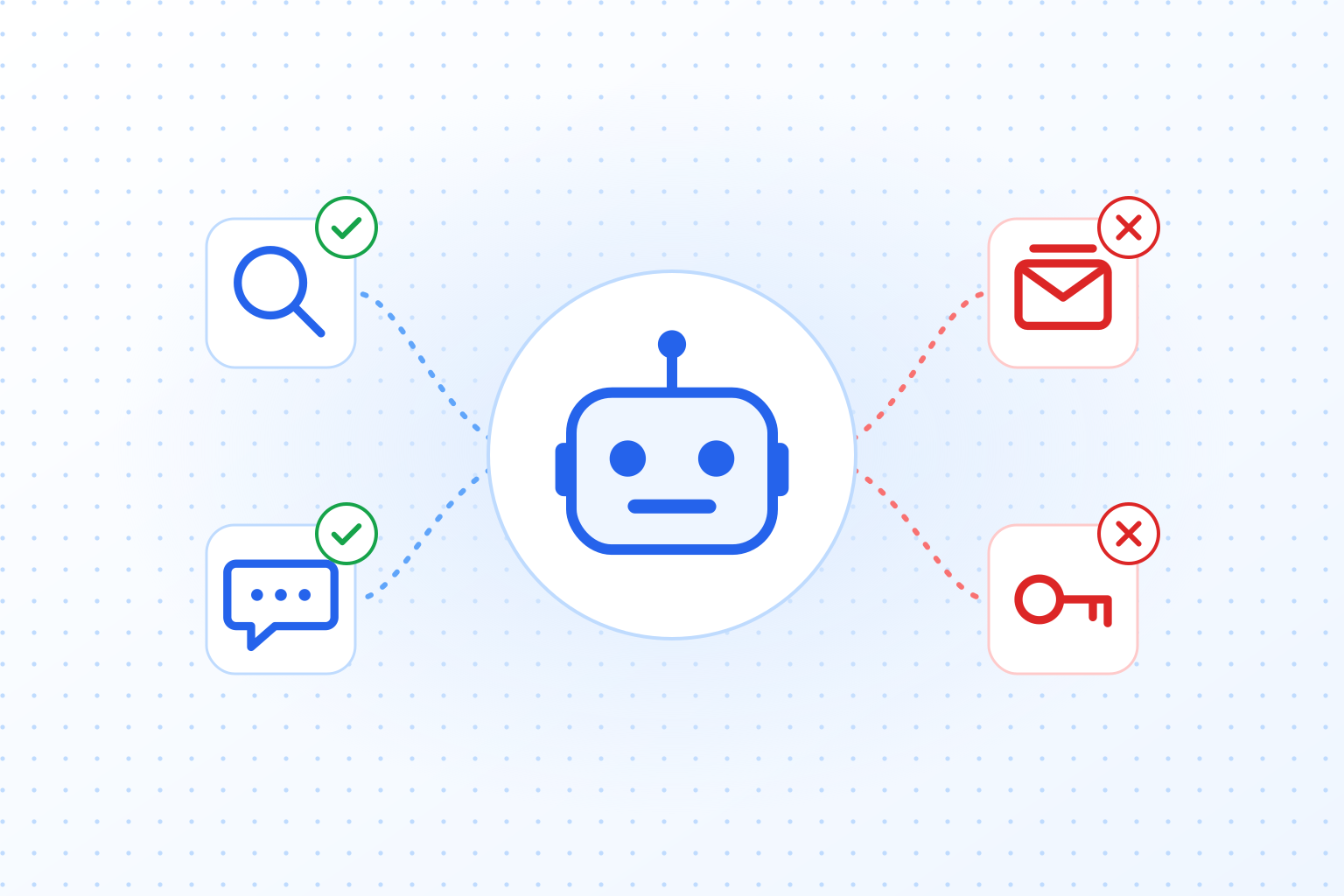
Not all bots are malicious, though. Search engine crawlers and chatbots do useful work. The difference is intent: good bots save effort, malicious bots look for weaknesses to exploit. Knowing how bot attacks work and what they cost makes it easier to protect your website from bot attacks.
What are bot attacks and how do they work?
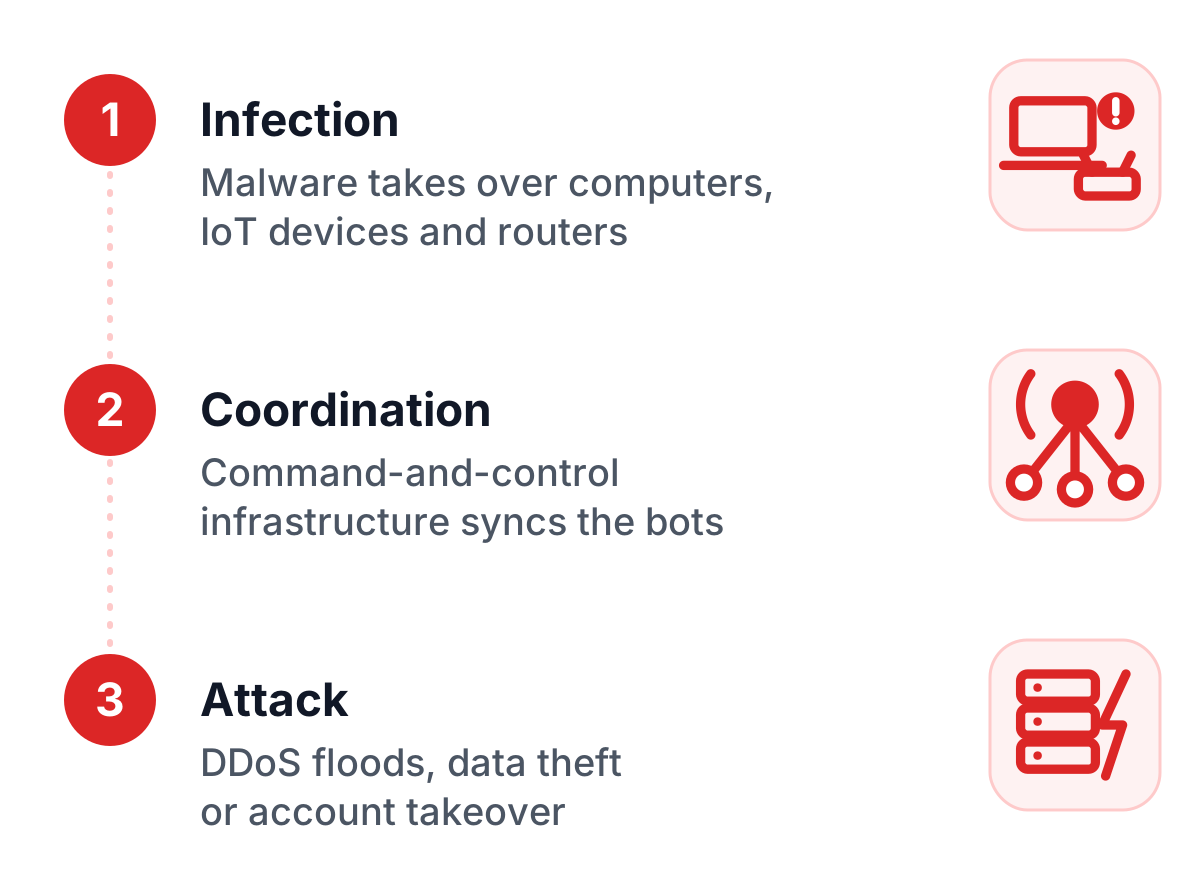
A bot is an automated program that performs tasks normally requiring human intervention. Malicious bots, however, are designed to exploit vulnerabilities. A typical bot attack progresses through several stages:
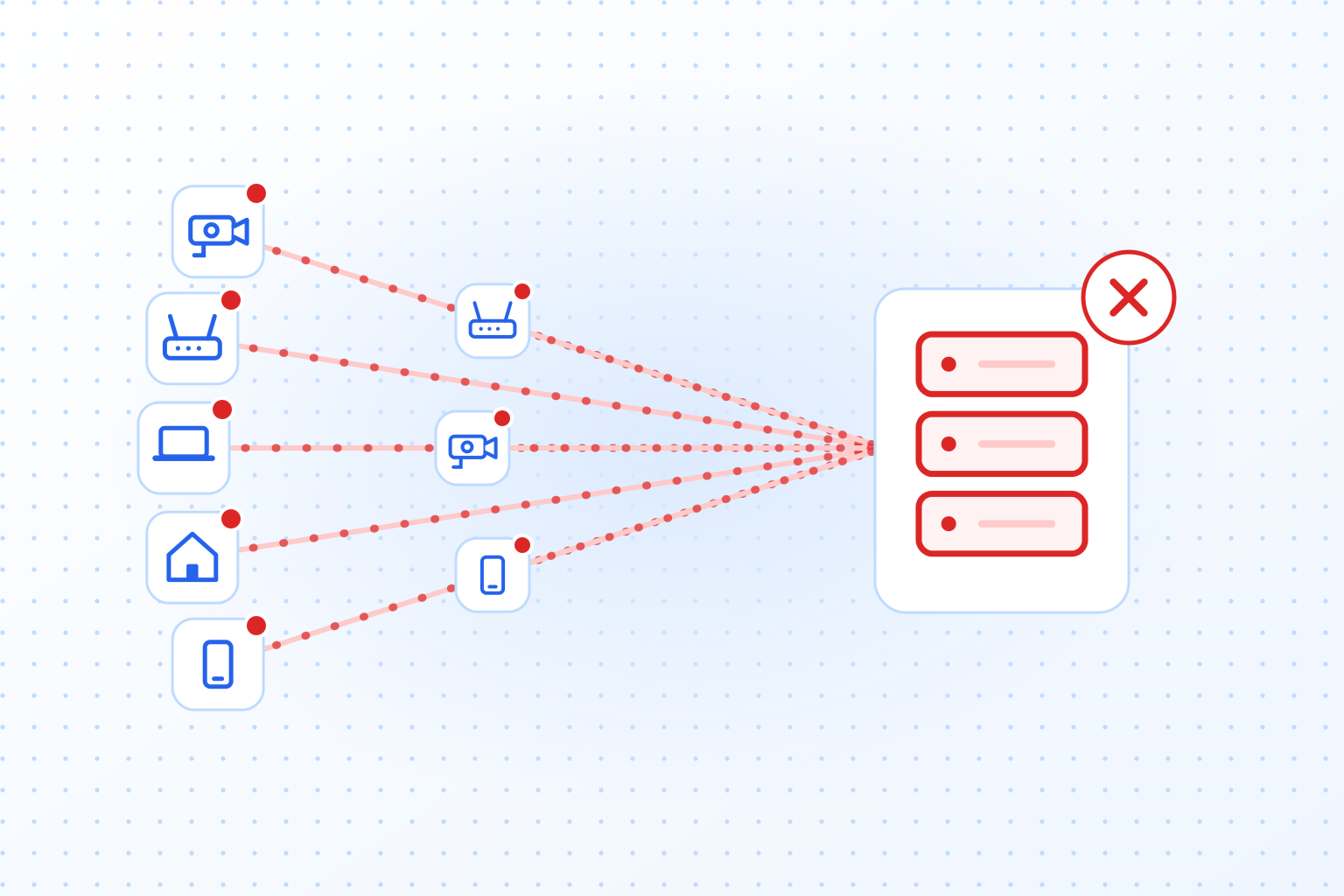
- Infection and setup: The attacker infects a variety of devices, such as computers, IoT devices, or routers, with malware. These devices become part of a botnet.
- Coordination: Through a central control unit, known as the Command-and-Control infrastructure, the bots are synchronized to execute commands.
- Attack: The bots carry out their tasks, such as sending massive requests (DDoS), extracting data, or taking over accounts (credential stuffing).
Malicious bots can also act autonomously by using algorithms to identify and exploit vulnerabilities in target systems.
Examples of bot attacks
The Dyn DDoS attack in 2016
One of the most well-known bot attacks was the attack on DNS provider Dyn in October 2016. A botnet called Mirai used infected IoT devices to send massive requests to Dyn’s servers. The attack caused major websites like Twitter (now X), Netflix, and Reddit to be offline for several hours. The economic damage amounted to millions of dollars.
Credential stuffing at Disney+
After the launch of the Disney+ streaming service in 2019, thousands of accounts were hacked. Attackers used bots to test stolen credentials on Disney+, a typical credential-stuffing attack. The result: frustrated customers and significant security investments.
The impact of bot attacks
The damage usually goes well beyond the attack itself:
- Financial losses: The cost of a bot attack can quickly run into millions. In addition to direct revenue losses due to downtime, there are costs for restoring IT infrastructure, legal disputes, and potential fines due to data protection violations.
- Data and security breaches: Malicious bots can steal credentials, extract sensitive information, or infiltrate systems. This brings legal risks and can cost customer trust for a long time.
- Reputational damage: An attack that becomes public can permanently damage a company’s image. Customers are less likely to trust a company that cannot protect their data.
- Technical strain: DDoS attacks and scraping can affect server performance and degrade the user experience. Overloaded systems lead to customer frustration and losses in online business.
Why CAPTCHAs protect against bot attacks
CAPTCHAs are a long-established way to tell bots from human users. Traditional CAPTCHAs like reCAPTCHA v2 present tasks meant to be solvable only by humans, such as identifying images or solving puzzles. Newer systems run invisibly in the background and use data and behavior analysis instead of puzzles.
Privacy concerns with traditional captchas
Solutions like reCAPTCHA v2, reCAPTCHA v3 and hCaptcha are widely used, but they raise privacy concerns. Many of these systems collect user data and process it on servers outside the EU, which raises GDPR questions. For companies in Europe, a GDPR-compliant bot protection such as TrustCaptcha avoids this problem: it works without cookies and processes data in EU data centers.
Effective measures against bot attacks
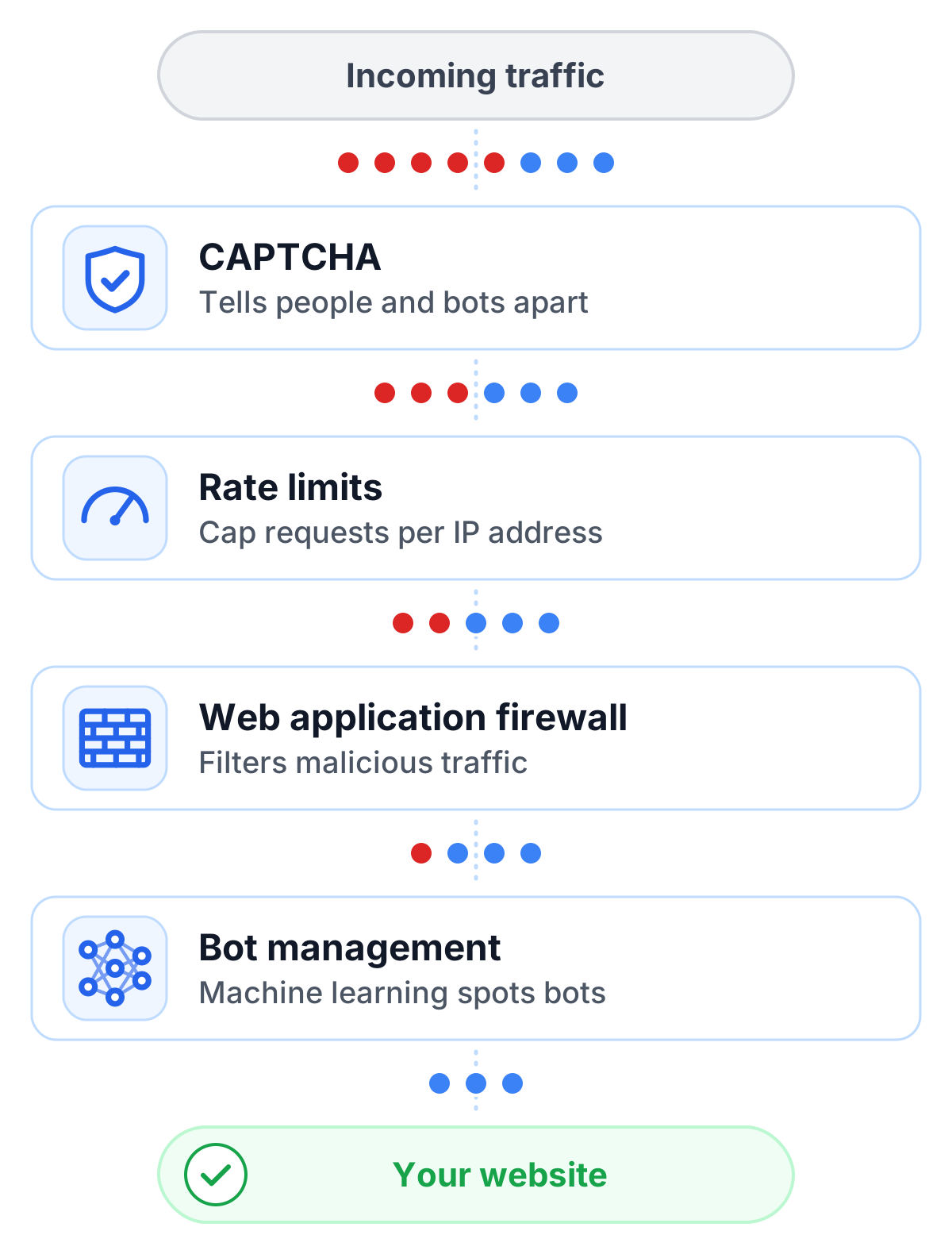
In addition to captchas, there are other strategies to prevent bot attacks:
- Rate limits: Limit the number of requests from a single IP address within a specific time frame. This quickly stops simple bots and excessive traffic. Attackers who rotate through many proxy IPs get around it, which is why rate limits work best together with a CAPTCHA.
- Web application firewalls (WAFs): These tools filter malicious traffic and protect your website from specific attacks.
- Bot management software: Specialized tools use machine learning to identify and block bot traffic.
For specific attacks such as brute force, account takeover or form spam, the TrustCaptcha solutions show which measures fit.
Cost-benefit analysis of bot defense measures
Defending against bot attacks is relatively cheap compared to the damage they can do. A CAPTCHA, a firewall and monitoring tools usually cost a fraction of what a successful attack costs afterwards.
Conclusion: the right protection against bot attacks
To protect your website from bot attacks, start where bots do the damage: forms, logins and checkout pages. A CAPTCHA there, rate limits and monitoring together stop most automated abuse. A GDPR-compliant solution such as TrustCaptcha does this without cookies, so you add protection without adding a privacy problem.