


What are bots?
Bots, short for “robots,” are software programs that perform tasks automatically, often without anyone controlling them directly. They speed up processes and take over repetitive work. That was the original idea behind them: save people effort on tasks a program can do, and bots still do exactly that today.
The term “bot” goes back to the early days of the internet, when simple programs were written to browse content such as websites. Those early programs led to the far more capable bots you find in almost every industry today, in online search, customer support and cybersecurity. They bring real benefits and real problems.
Types of bots
Internet bots
Internet bots, also known as web bots, are perhaps the most well-known category. These bots operate on the internet, performing tasks such as browsing websites, collecting data, or analyzing content. The best-known example is search engine bots like Googlebot, which crawl websites and index their content so that search engines can show relevant results.
Another use of internet bots is web scraping. Here, bots extract structured data from websites, such as product prices or weather information. Many companies base pricing and other business decisions on data collected this way.
A newer group are AI crawlers and AI agents. Crawlers such as GPTBot or ClaudeBot collect web content to train and update AI models, and AI agents can now click through websites and fill in forms on a user’s behalf. Website operators can steer the crawlers through robots.txt. Agents are harder to tell apart from people, which is one reason bot detection looks at behavior and not only at the user agent.
Social media bots
Social media bots are active on platforms like X (formerly Twitter), Facebook, or Instagram. They can automatically post content, write comments, or even generate likes and followers. Companies use them to increase their reach and better engage their target audience. However, social media bots also pose risks, as they can be misused to spread fake news or manipulate discussions.
Malicious bots
Not all bots have good intentions. Malicious bots, also known as “malware bots,” are developed to harm systems, steal data, or disrupt networks. Common types include:
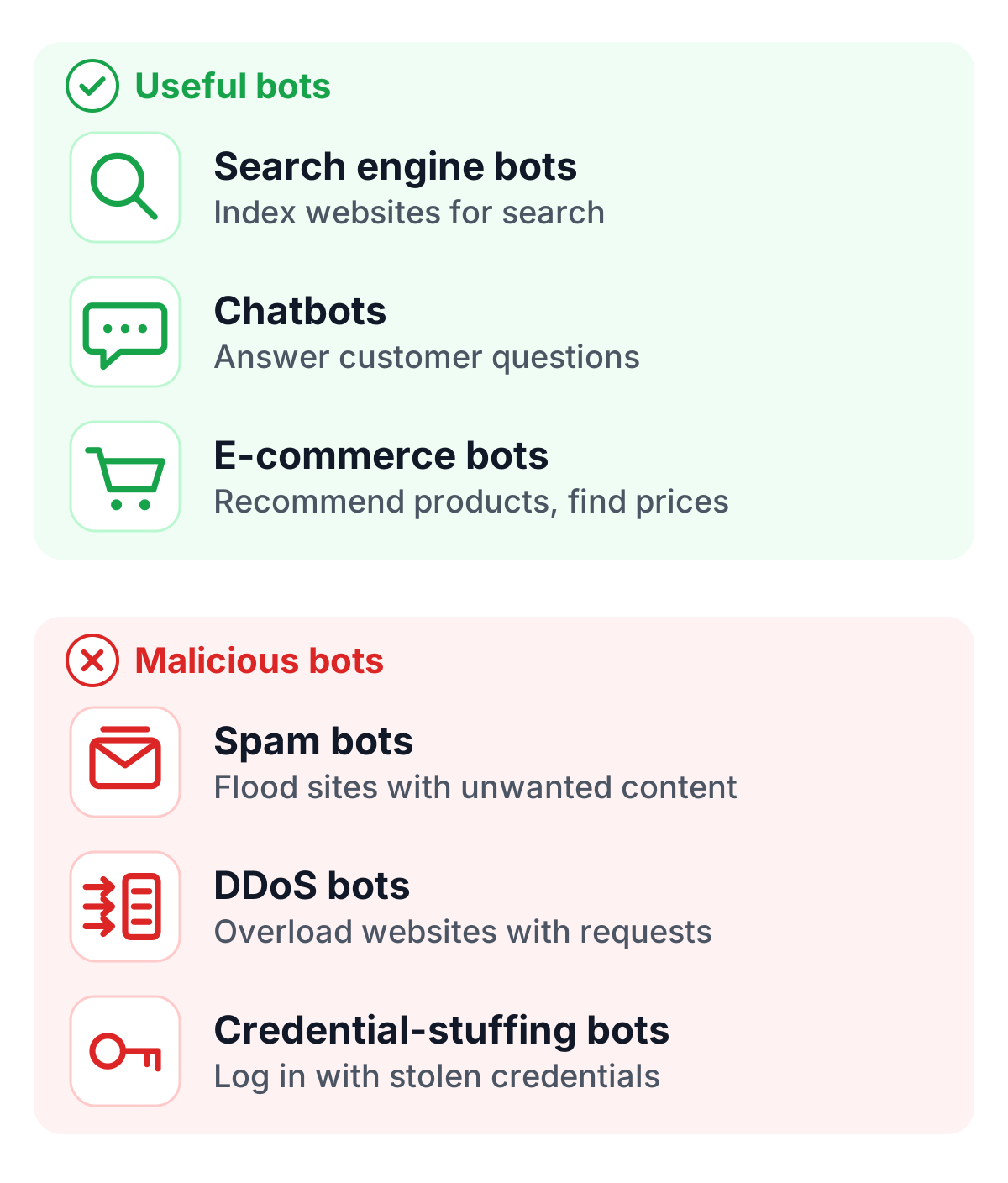
- Spam bots: These flood websites, social networks, or emails with unwanted content.
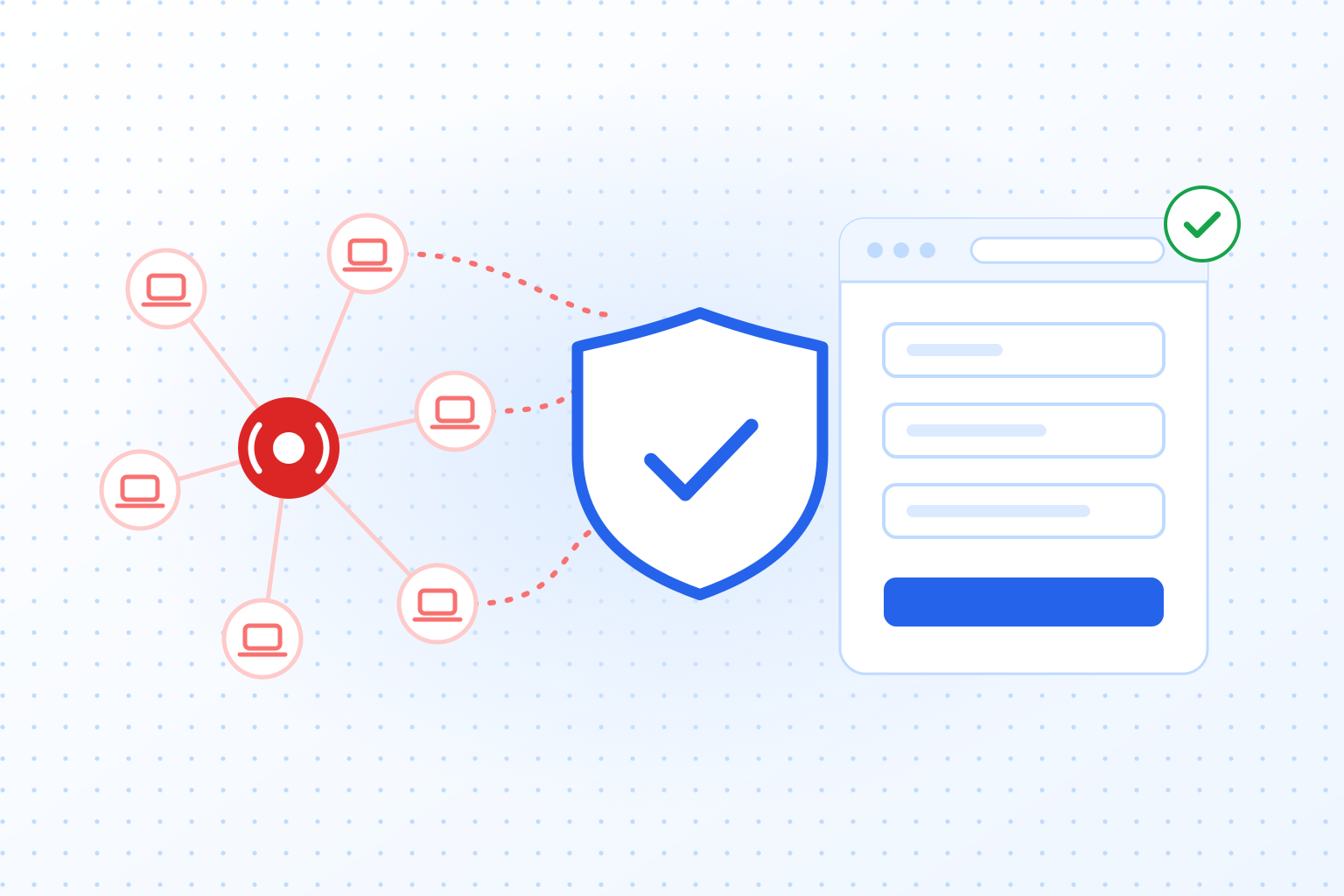
- DDoS bots: These attack websites by overloading them with requests until they become inaccessible.
- Credential-stuffing bots: These use stolen login credentials to gain unauthorized access to accounts.
Useful bots
On the positive side, there are many useful bots that make life easier for businesses and consumers. These include:
- Chatbots: These bots provide customer service support, answer questions, and solve problems.
- E-commerce bots: They assist users with shopping, such as through product recommendations or price search services.
- Search engine bots: These ensure that websites are discoverable by analyzing and indexing content.
How do bots work?
Bots are based on algorithms that give them specific instructions. These algorithms can be relatively simple, such as responding to recurring patterns, or they can incorporate highly complex functions like machine learning and artificial intelligence.
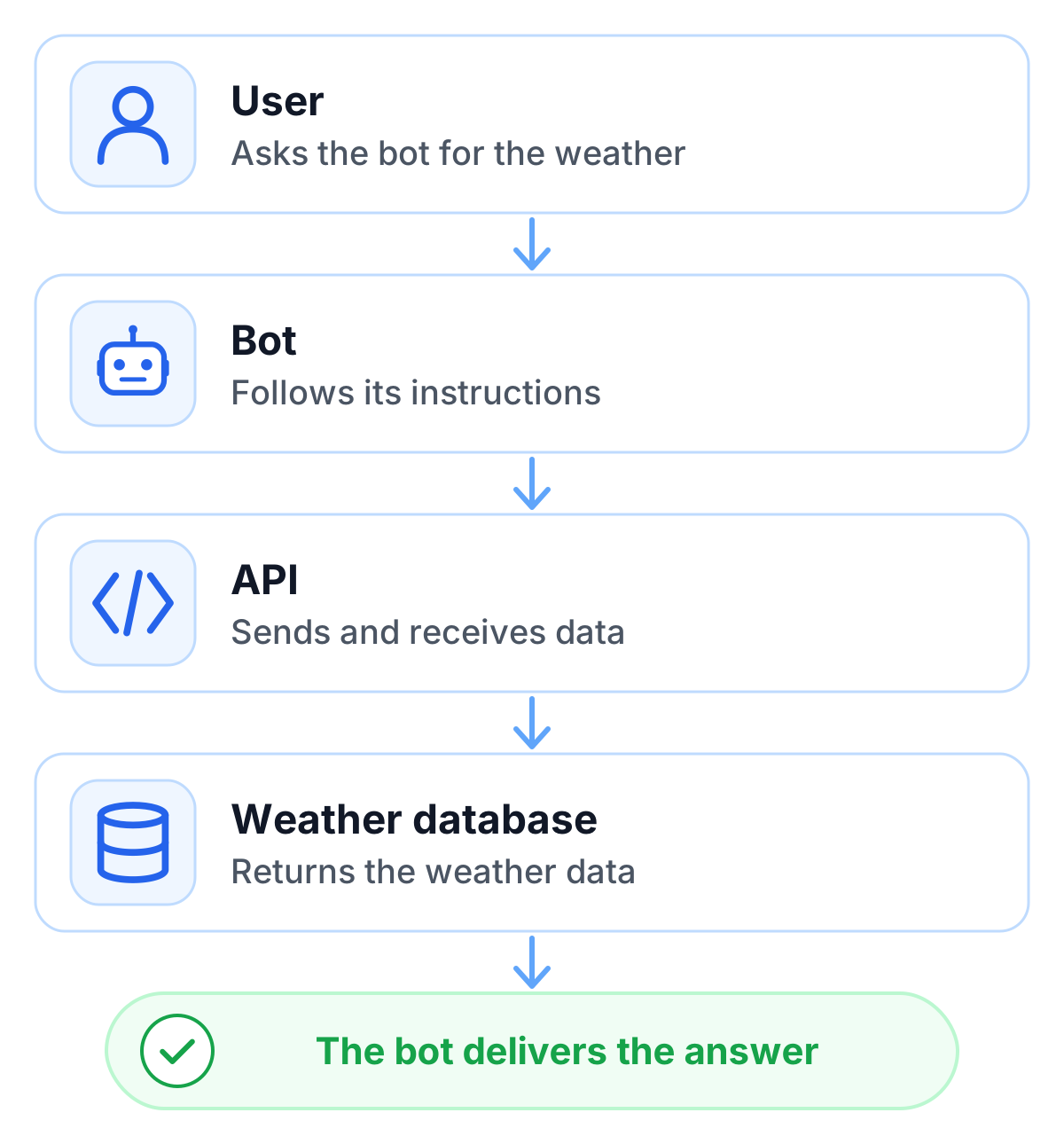
Bots often communicate via APIs (Application Programming Interfaces). APIs enable bots to send and receive data to execute their tasks. For example, a weather bot retrieves information from a weather database via an API and delivers it to the user.
More and more bots use AI to adapt their behavior. That lets them imitate people more convincingly, learn from each interaction and even take on creative tasks such as writing text.
Advantages and disadvantages of bots
Advantages
- Automation and efficiency: Bots handle repetitive tasks, such as answering simple customer inquiries, without requiring human resources.
- Round-the-clock availability: They work continuously, which is especially beneficial in customer service and global businesses.
- Scalability: Bots allow companies to serve more users simultaneously without hiring additional staff.
Disadvantages
- Security risks: Malicious bots can infiltrate networks, steal data, or execute attacks on systems.
- Manipulation risk: Bots can influence social media, such as spreading fake news or artificially shaping opinions.
- Economic impact: Automation through bots can, in some cases, threaten human jobs.
How do CAPTCHAs protect against malicious bots?
CAPTCHAs (Completely Automated Public Turing Test to Tell Computers and Humans Apart) are one of the most widely used tools for blocking bots. Classic CAPTCHAs present tasks that are easy for humans but difficult for bots to solve.
How CAPTCHAs work
CAPTCHAs analyze user behavior or employ visual and interactive tests to differentiate between humans and bots. These include:
- Image recognition: Users must identify specific objects in images, such as traffic lights or pedestrian crossings.
- Text-based tests: Distorted letters or numbers that must be retyped.
- Invisible CAPTCHAs: These detect bots based on their behavior without actively disturbing the user.
What CAPTCHAs protect against
Modern CAPTCHAs protect websites from:
- Spam bots: They prevent the automated sending of unwanted content.
- Credential-stuffing attacks: CAPTCHAs block bots attempting to use stolen credentials.
- Data abuse: They make it difficult for bots to extract large amounts of sensitive information.
Many CAPTCHAs now rely on behavioral analysis and other checks in the background, so most visitors never see a puzzle. Genuine users notice little or nothing of them.
How to protect against malicious bots
No single measure stops every bot. These measures work best in combination:
- Using CAPTCHAs: A CAPTCHA on forms and login pages stops automated submissions where they happen. Modern ones do this without making real visitors solve puzzles.
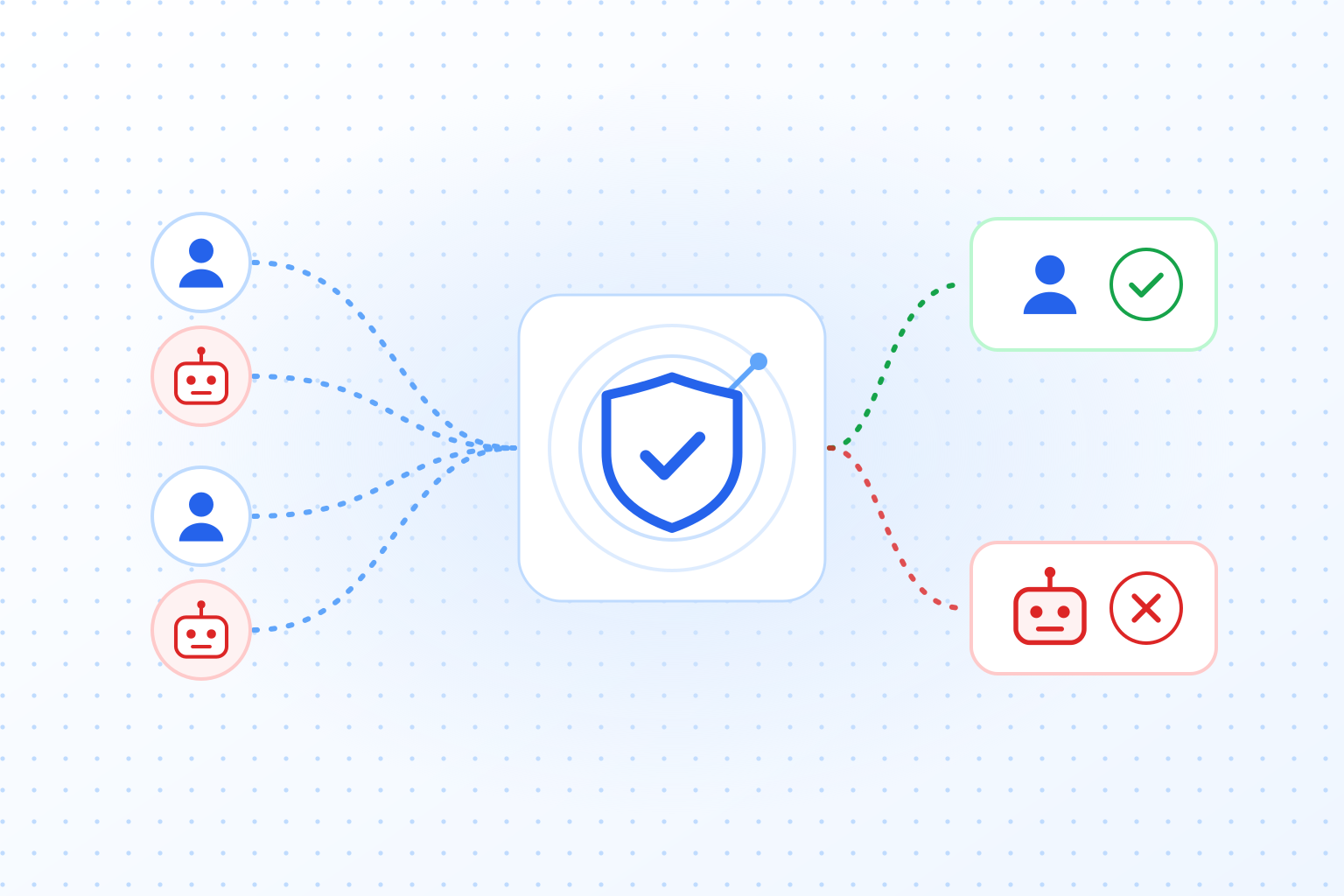
- Bot management tools: Specialized bot detection software can monitor and block suspicious traffic.
- Regular security updates: Updated software is better protected against bot attacks.
- Website traffic analysis: Deviations in user behavior can indicate bot activity.
- Firewalls: Web Application Firewalls (WAF) block suspicious requests.
Conclusion
Bots started as simple automation programs and now run in almost every part of the internet. Most of them are useful: crawlers make websites findable, chatbots answer routine questions. But the more bots there are, the more of them are built to spam, scrape or break into accounts.
For website operators, the task is to let the useful bots through and stop the harmful ones. A CAPTCHA on forms and logins, traffic monitoring and a WAF are a sensible combination, and a modern CAPTCHA does its part without making visitors solve puzzles.
'/%3e%3c/mask%3e%3cradialGradient%20id='glow'%20cx='0.5'%20cy='0.5'%20r='0.5'%3e%3cstop%20offset='0'%20stop-color='%23dbeafe'%20stop-opacity='0.95'/%3e%3cstop%20offset='1'%20stop-color='%23dbeafe'%20stop-opacity='0'/%3e%3c/radialGradient%3e%3c/defs%3e%3crect%20width='1536'%20height='1024'%20fill='url(%23bg)'/%3e%3crect%20width='1536'%20height='1024'%20fill='url(%23dots)'%20mask='url(%23dotmask)'/%3e%3cellipse%20cx='768'%20cy='512'%20rx='640'%20ry='420'%20fill='url(%23glow)'/%3e%3cpath%20d='M460%20520%20H618'%20stroke='%232563eb'%20stroke-width='8'%20stroke-linecap='round'/%3e%3cpath%20d='M596.9%20531.5%20L618%20520%20L596.9%20508.5'%20fill='none'%20stroke='%232563eb'%20stroke-width='7'%20stroke-linecap='round'%20stroke-linejoin='round'/%3e%3cpath%20d='M918%20520%20H1066'%20stroke='%2360a5fa'%20stroke-width='8'%20stroke-dasharray='4%2018'%20stroke-linecap='round'/%3e%3cpath%20d='M1044.9%20531.5%20L1066%20520%20L1044.9%20508.5'%20fill='none'%20stroke='%2360a5fa'%20stroke-width='7'%20stroke-linecap='round'%20stroke-linejoin='round'/%3e%3crect%20x='210'%20y='400'%20width='240'%20height='240'%20rx='40'%20fill='%23ffffff'%20stroke='%23bfdbfe'%20stroke-width='3'%20filter='url(%23shadow)'/%3e%3crect%20x='265.0'%20y='469.7'%20width='130'%20height='80.6'%20rx='7.8'%20fill='%23ffffff'%20stroke='%232563eb'%20stroke-width='7'/%3e%3cpath%20d='M249.4%20557.3%20h161.2'%20stroke='%232563eb'%20stroke-width='9.1'%20stroke-linecap='round'/%3e%3crect%20x='255'%20y='290'%20width='150'%20height='56'%20rx='28'%20fill='%23eff6ff'%20stroke='%232563eb'%20stroke-width='4'/%3e%3ccircle%20cx='285'%20cy='318'%20r='10'%20fill='%232563eb'/%3e%3crect%20x='309'%20y='312'%20width='70'%20height='12'%20rx='6'%20fill='%232563eb'%20opacity='0.55'/%3e%3ccircle%20cx='768'%20cy='520'%20r='140'%20fill='%23ffffff'%20stroke='%232563eb'%20stroke-width='8'%20filter='url(%23shadow)'/%3e%3ccircle%20cx='768'%20cy='520'%20r='110'%20fill='%23eff6ff'/%3e%3cpath%20d='M693.0%20501.1%20C723.0%20475.9%20813.0%20475.9%20843.0%20501.1%20C843.0%20551.5%20798.0%20564.1%20777.0%20532.6%20Q768%20520%20759.0%20532.6%20C738.0%20564.1%20693.0%20551.5%20693.0%20501.1%20Z'%20fill='%23ffffff'%20stroke='%232563eb'%20stroke-width='7'%20stroke-linejoin='round'/%3e%3cellipse%20cx='735.0'%20cy='516.22'%20rx='15.0'%20ry='10.08'%20fill='%232563eb'/%3e%3cellipse%20cx='801.0'%20cy='516.22'%20rx='15.0'%20ry='10.08'%20fill='%232563eb'/%3e%3crect%20x='1086'%20y='400'%20width='240'%20height='240'%20rx='40'%20fill='%23ffffff'%20stroke='%23bfdbfe'%20stroke-width='3'%20filter='url(%23shadow)'/%3e%3ccircle%20cx='1206'%20cy='520'%20r='70'%20fill='%23ffffff'%20stroke='%232563eb'%20stroke-width='7'/%3e%3cpath%20d='M1136%20520%20h140%20M1206%20450%20c-42.0%2042.0%20-42.0%2098.0%200%20140%20M1206%20450%20c42.0%2042.0%2042.0%2098.0%200%20140'%20fill='none'%20stroke='%232563eb'%20stroke-width='5.6000000000000005'/%3e%3crect%20x='1131'%20y='290'%20width='150'%20height='56'%20rx='28'%20fill='%23f3f4f6'%20stroke='%239ca3af'%20stroke-width='4'/%3e%3ccircle%20cx='1161'%20cy='318'%20r='10'%20fill='%239ca3af'/%3e%3crect%20x='1185'%20y='312'%20width='70'%20height='12'%20rx='6'%20fill='%239ca3af'%20opacity='0.55'/%3e%3cpath%20d='M422%20318%20C%20530%20240%20648%20230%20728%20370'%20fill='none'%20stroke='%2360a5fa'%20stroke-width='5'%20stroke-dasharray='3%2014'%20stroke-linecap='round'/%3e%3cpath%20d='M710.9%20359.6%20L728%20370%20L727.5%20350.0'%20fill='none'%20stroke='%2360a5fa'%20stroke-width='6'%20stroke-linecap='round'%20stroke-linejoin='round'/%3e%3c/svg%3e)