What is JavaScript?
JavaScript is one of the best-known and most widely used programming languages in the world. Almost every modern website and web application relies on it, and it now runs well beyond the browser, which is why developers can hardly avoid it.
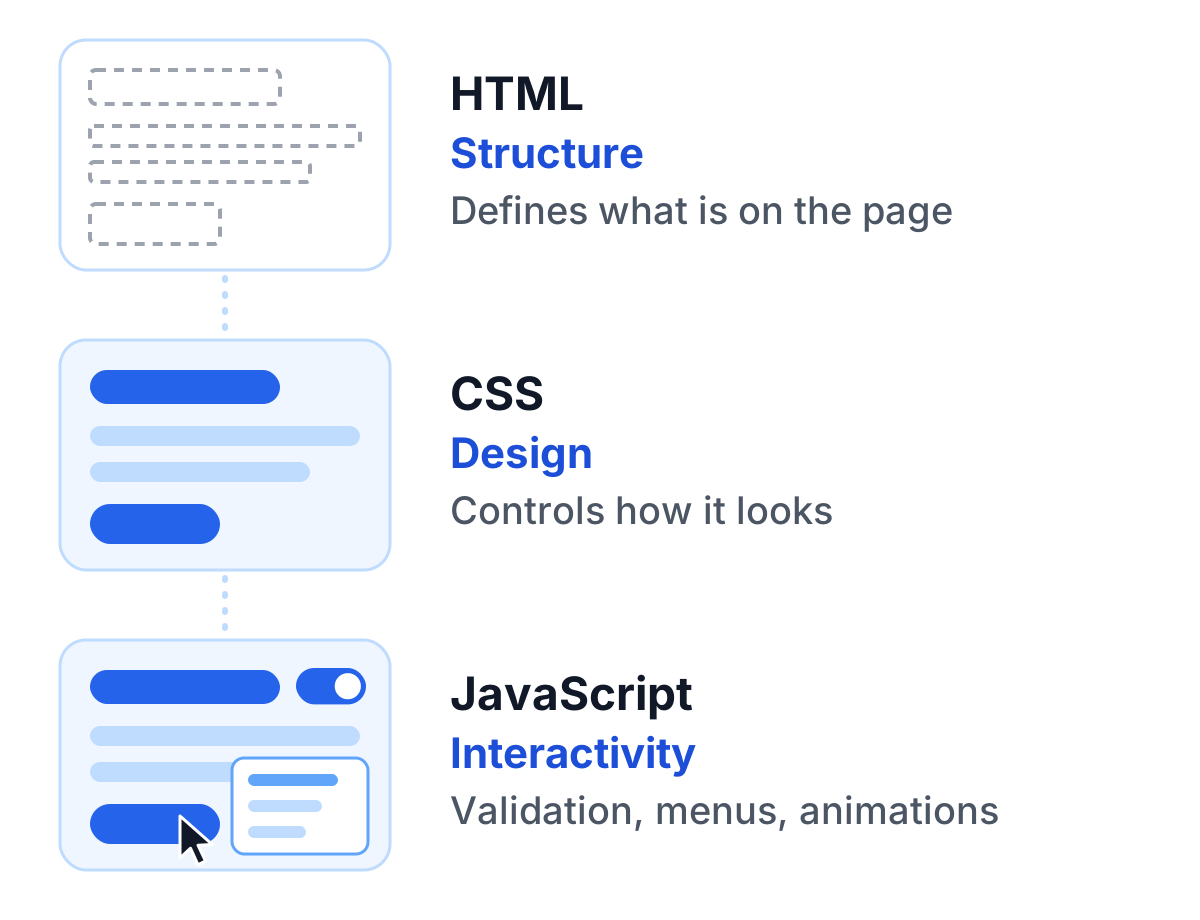
JavaScript is a dynamic programming language originally developed to make websites more interactive. Unlike HTML, which defines the structure of a page, and CSS, which is responsible for design, JavaScript enables interactivity. The language was developed in 1995 by Brendan Eich and has since evolved into one of the most versatile programming languages in the world.
Advantages of JavaScript
JavaScript is executed directly in the browser, making it particularly accessible and fast. Some of the main advantages of the language are:
- Platform independence: JavaScript runs on all modern web browsers without additional software.
- Interactivity: From form validation to animations, JavaScript brings websites to life.
- Extensibility: The language can be extended with libraries and frameworks such as React or Vue.js.
In addition, JavaScript has a large developer community that continuously develops new tools, resources, and best practices. Beginners find answers quickly, and experienced developers can build on proven tools.
Why is JavaScript so important?
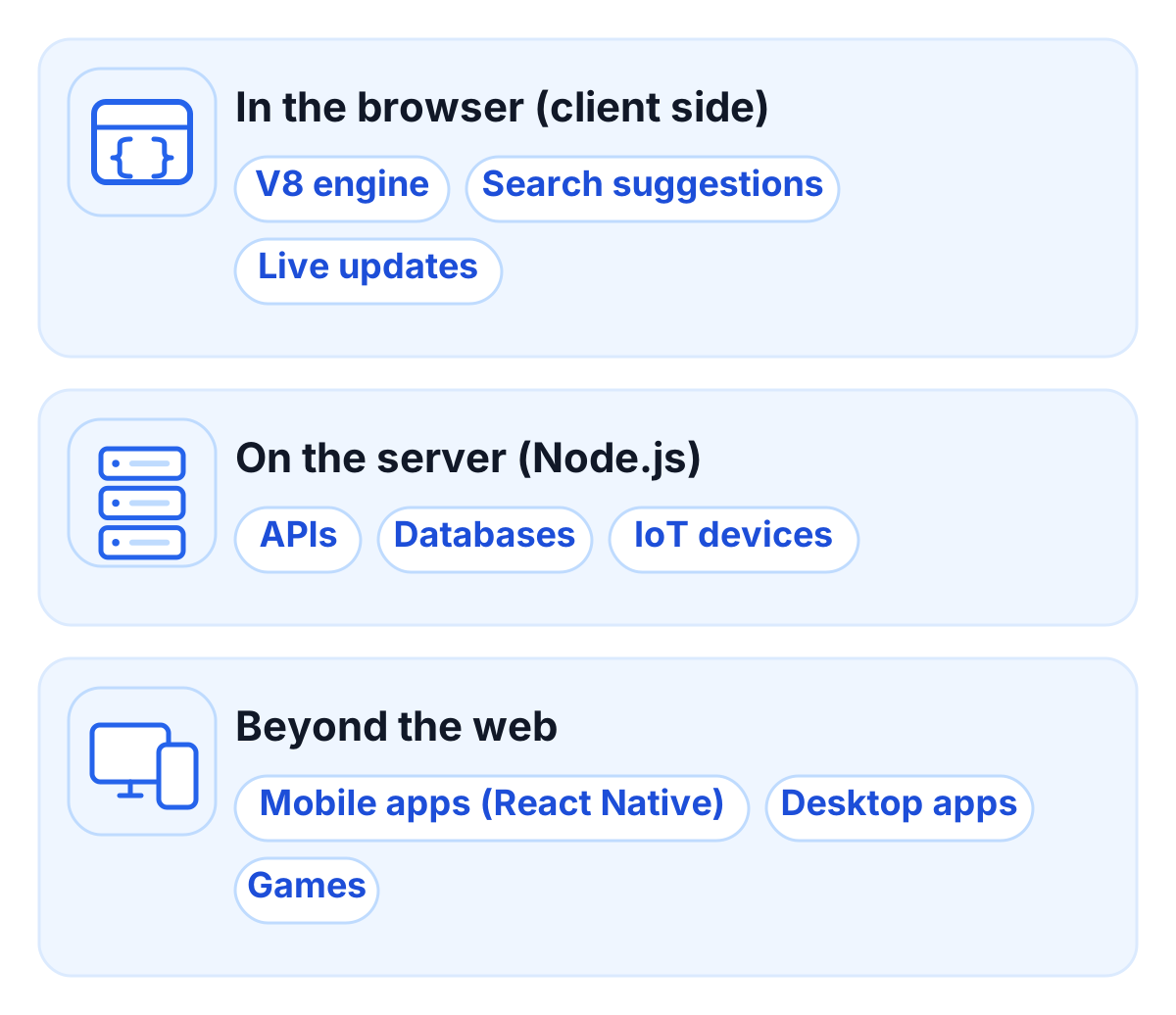
JavaScript is the foundation of the modern web. Without JavaScript, many of the features we take for granted (such as real-time updates, interactive maps, or dropdown menus) would not be possible. In addition to its client-side usage, JavaScript has also gained importance on the server-side with the introduction of Node.js. This allows developers to program both frontend and backend applications in the same language.
JavaScript in web development
JavaScript is the one scripting language that every modern browser runs natively. That is why there is hardly any web development without it. Typical areas of application include:
- Interactive websites: JavaScript enables dynamic content such as real-time notifications or search suggestions.
- Frameworks and libraries: Complex applications can be efficiently built using frameworks like React, Angular, or Vue.js.
- Mobile applications: Tools like React Native allow mobile apps to be developed with JavaScript.
JavaScript beyond the web
Thanks to its versatility, JavaScript has established itself beyond pure web development. Technologies like Node.js allow server-side applications to be created that are fast and scalable. JavaScript is also used in areas such as game development, controlling IoT devices, and even creating desktop applications. This range makes the language a true all-rounder.
How does JavaScript work?
JavaScript is executed in the browser by engines such as Google Chrome’s V8 engine. These engines parse the code and compile it to machine code while the page runs, which is why modern JavaScript is fast. JavaScript can also read and change a page’s HTML and CSS while it is open, and that is how structure, design and behavior come together.
Client-side and server-side usage
Traditionally, JavaScript is used on the client-side to process user interactions directly in the browser. This allows for quick responses to user actions without needing to reload the entire page. An example is the display of real-time search suggestions. Another is a JavaScript CAPTCHA, which runs its check in the browser before a form is sent.
However, with the development of Node.js, server-side use of JavaScript has also become possible. This opens up a variety of new application possibilities, such as creating APIs, processing databases, or even controlling IoT devices. Combined with serverless architectures, JavaScript offers flexible solutions for modern applications.
Main features of JavaScript
JavaScript is used in a wide range of applications. Its main features include:
- Dynamic content: JavaScript can update websites in real-time, such as live chats or news feeds.
- Interactive user interfaces: Features like drag-and-drop or interactive maps are based on JavaScript.
- Automation: Developers can automate repetitive tasks, such as form validation.
- Advanced functionalities through frameworks: React or Vue.js simplify the development of modern, scalable applications.
JavaScript also supports asynchronous programming, meaning certain tasks can run in the background while the application continues to function. This matters most in data-heavy applications, where users should not have to wait for every request.
Challenges and limitations
While JavaScript offers many advantages, there are also challenges. A common issue is security, as JavaScript is executed directly in the browser. Security vulnerabilities such as Cross-Site Scripting (XSS) can lead to malicious scripts being executed on a website. Developers must proceed carefully and implement security measures like Content Security Policies (CSP).
Another issue is performance in large applications. Poorly structured code can significantly slow down a website’s loading times. Build tools such as Vite, esbuild or webpack shrink and split the code, and Babel translates newer syntax so older browsers can run it.
Browser compatibility can also be a challenge. Although modern browsers are largely standardized, there are still differences in how JavaScript is interpreted. Developers must consider this to ensure their applications work equally well in all browsers.
The future of JavaScript
JavaScript continues to evolve. A new edition of the ECMAScript standard appears every year and adds features such as modules, async/await and new methods for arrays and objects. Current trends, such as the growing popularity of TypeScript (a typed superset of JavaScript), show that the language continues to grow and adapt to new requirements.
Additionally, JavaScript is becoming increasingly important in modern technologies like Progressive Web Apps (PWAs), serverless architectures, and IoT applications. None of this suggests that JavaScript will lose ground any time soon.
Another trend is the growing use of JavaScript for machine learning and AI. Libraries like TensorFlow.js enable developers to run neural networks directly in the browser and create data-intensive applications without relying on external servers.
Conclusion: why JavaScript is so important
JavaScript changed how we use the internet. It runs dynamic websites, mobile apps and server applications, and a huge developer community keeps extending it. If you build anything for the web, as a beginner or as a professional, you will work with JavaScript sooner or later.